As your bamboo raft slips away from the riverbank, the world falls into a soft hush, broken only by the gentle murmur of water over submerged stones and the delicate wing-whir of hummingbirds darting between blossoms overhead. Each bamboo pole dipped into the current seems to whisper its lullaby—rippling echoes that soothe the soul and invite you to breathe a little deeper.
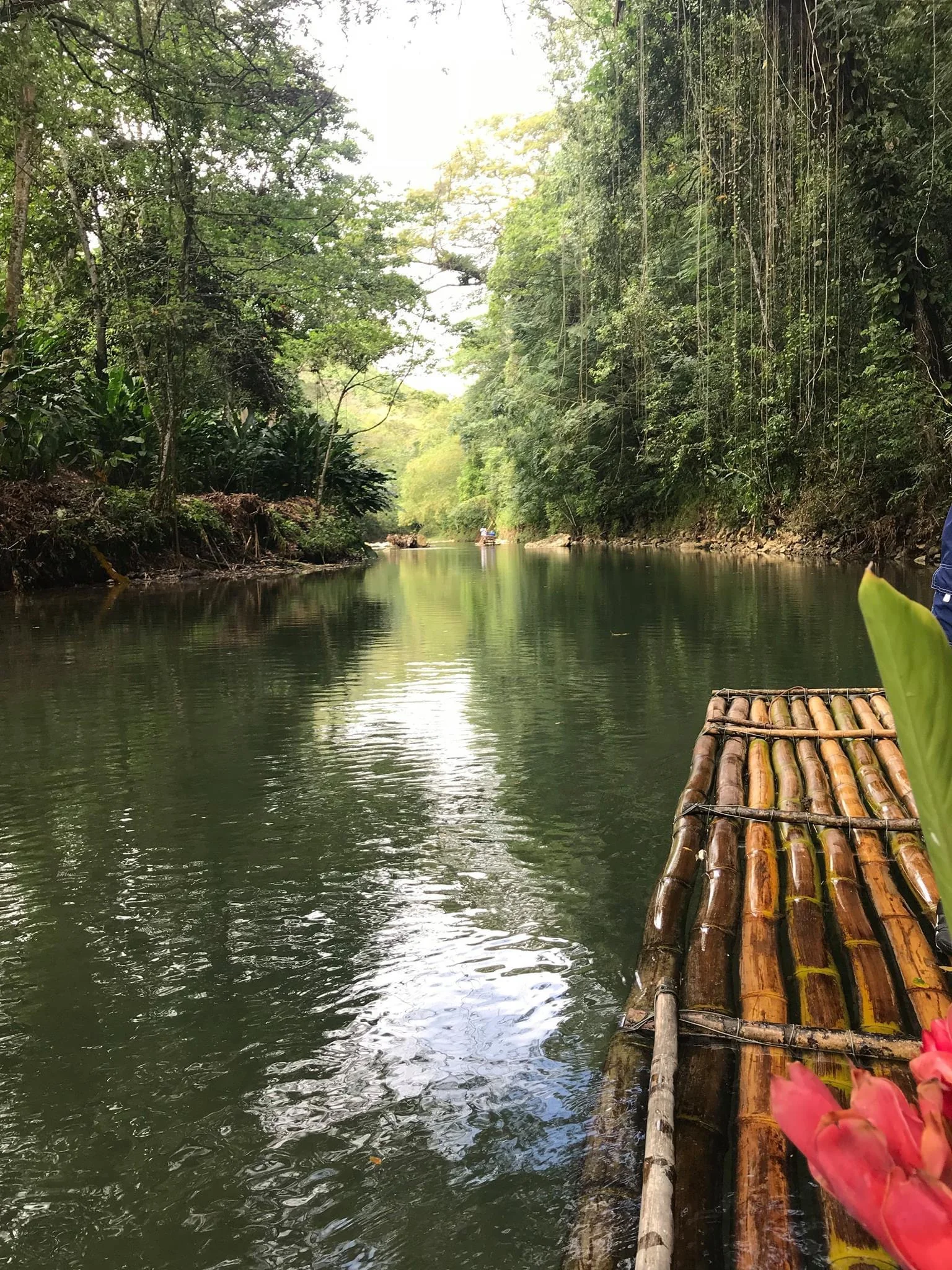
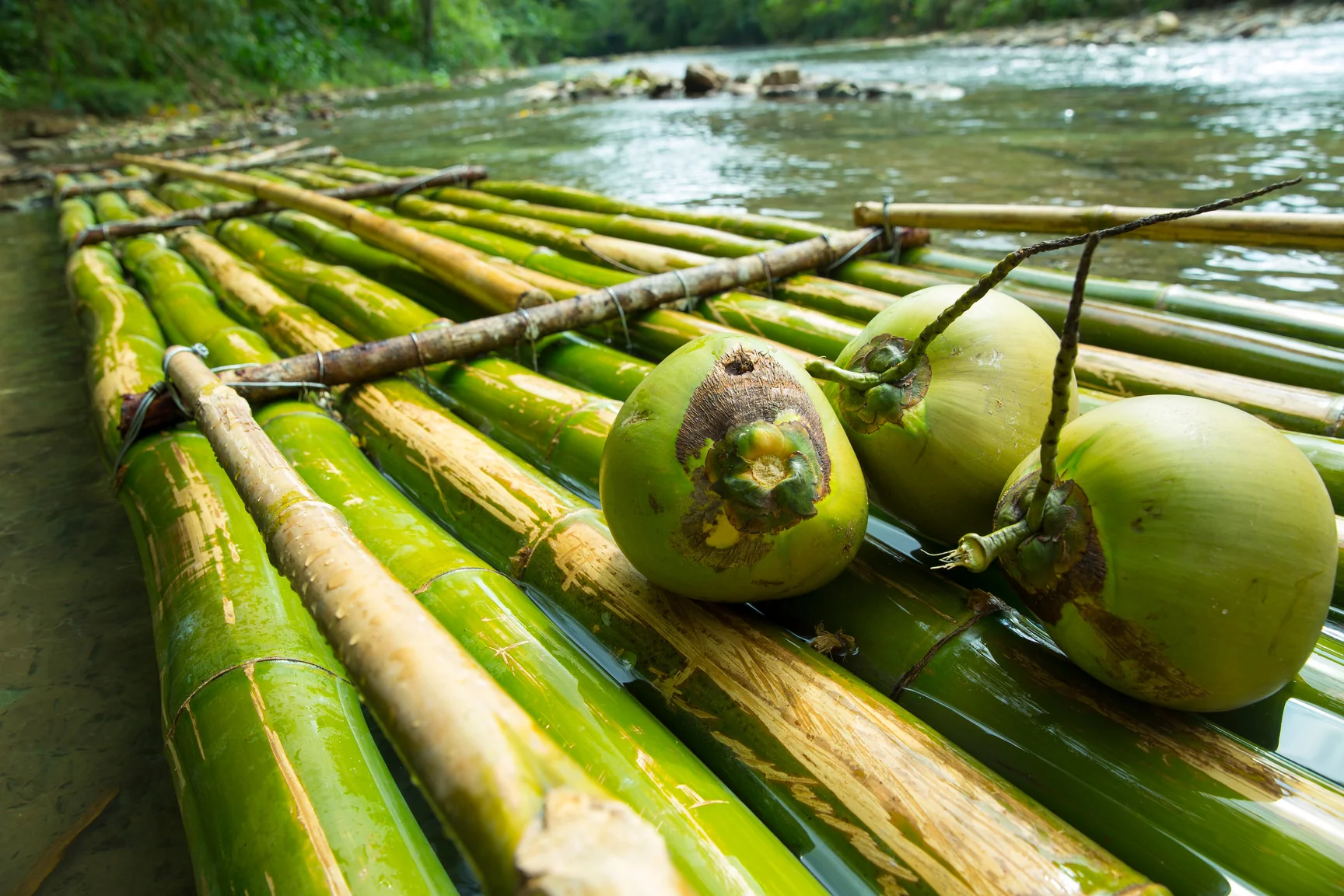
If you take the Great River route, your raft slides under a leafy canopy and rests on a smooth limestone shelf. Here, you’re handed a freshly cracked coconut—its cool, sweet water a perfect counterpoint to the day’s warmth—and invited to sink your legs into the river’s edge. The limestone beneath your feet, worn supple by centuries of flowing water, acts as a natural exfoliant: its fine, calcium-rich particles buff away rough skin, while its mineral content draws out impurities and soothes tired muscles. As the gentle current laps around your ankles, the stone’s porous surface releases trace amounts of magnesium and calcium, helping to ease aching joints and restore circulation. You close your eyes, letting the combination of coconut’s subtle sweetness, limestone’s therapeutic touch, and the river’s gentle song wash over you—an unforgettable interlude of pure, restorative calm. Ahhhhh….
The Sugar Rivers
Jamaica’s bamboo rafting is more than just a serene float down a jungle-lined river—it’s a living link to the island’s past and a testament to its thriving eco-tourism industry. What began as a pragmatic means of moving sugar and bananas has evolved into one of Jamaica’s most sought-after experiences, drawing hundreds of thousands of visitors each year.
Bamboo rafts first plied Jamaica’s waterways during the colonial sugar era. On the Martha Brae River in Trelawny, sturdy 30-foot rafts ferried sugar, molasses and later bananas from inland estates to the port at Falmouth, where they were loaded onto ships bound for Europe. Similar scenes played out on the Rio Bueno and other rivers. Though built for commerce, these simple bamboo platforms proved remarkably stable—an unintended precursor to modern leisure rafting.
Indigenous Influences & Taino Legends
While there’s limited evidence that the pre-Columbian Taino built large bamboo rafts, bamboo itself was integral to Taino life—for canoes, tools and structures—and the Maroons later adopted these materials for river crossings. Today’s rafting tours often invoke the legend of “Miss Martha Brae,” a Taino woman who, according to folklore, was forced by Spanish settlers to reveal hidden gold and then used her powers to change the river’s course and drown her captors. These kind of stories—woven into tour narrations—connect riders to Jamaica’s earliest inhabitants and their resilience.
The Rise of Leisure Rafting
Originally designed to move bananas, bamboo rafting became a recreational pastime in the early 1950s when Hollywood actor Errol Flynn, who’d made Port Antonio his home, began scenic floats down the Rio Grande purely for enjoyment. Flynn’s celebrity excursions—complete with picnics and rum punches—attracted international attention, transforming a utilitarian craft into a premier tourist draw. His pioneering role is commemorated by every rafting operation on the Rio Grande today.
Jamaica’s Premier Rafting Rivers
Great River (Hanover/St. James)
One of Jamaica’s three “rafting rivers,” famed for its canopy-tunnel passages and proximity to Montego Bay.
Martha Brae River (Trelawny)
Three miles of calm, emerald water, easily accessible from Montego Bay and Ocho Rios.
White River (Ocho Rios)
Quieter and narrower, ideal for couples or small groups seeking a tranquil escape.
Rio Grande (Portland)
A longer, more secluded 10 km journey through a verdant valley, where tours often include riverside picnics and limestone foot massages.