Game bird shooting in Jamaica is an old tradition, dating back to the early plantation era and shaped by British sporting customs. Over time, it became something uniquely Jamaican, influenced by the land, the people, and an unwritten code passed from one generation to the next.
For those of us who grew up around it, bird shooting has never been just a sport. It is seasonal. It is shared. And it carries responsibility.
My own experience with pigeon and dove hunting began as a child. I was not brought into the bush to shoot. I was brought to help. Alongside local boys and girls from the surrounding rural communities, I learned to pick up birds for my father, uncles, and their friends. We were referred to as bird boys and bird girls, and we were as much a part of the tradition as the hunters themselves. The bird bush was where we learned discipline, patience, and respect long before we understood the sport itself.
From a young age, we are taught and reminded that hunting comes with responsibility. You learn to move carefully in the bush, to know your surroundings, and to understand that what you are carrying is not a toy. Firearm safety is taught early and reinforced constantly, and through that discipline comes respect for the birds, the land, and the people who share these spaces. Those lessons stayed with me, and they are the same values I have passed on to my own children, who are now avid hunters themselves.
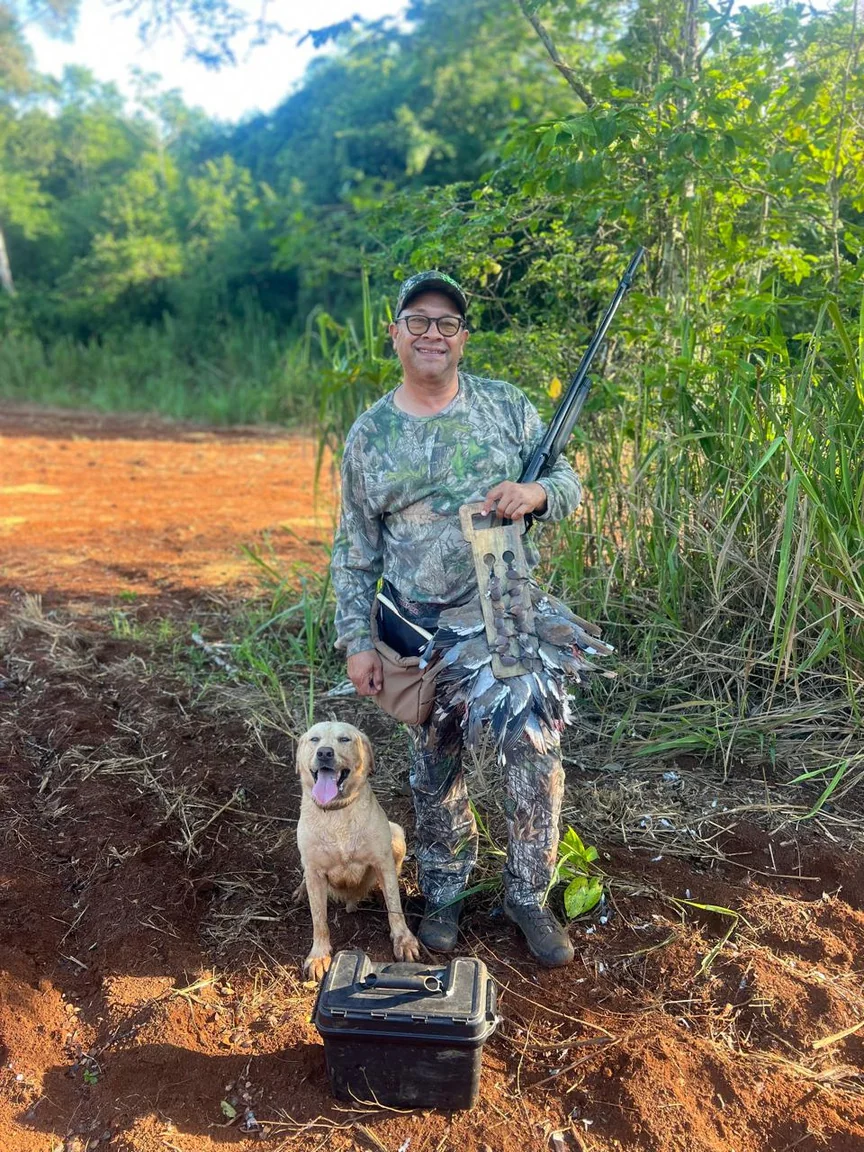
Dawn in the Jamaican bush — where tradition, discipline, and nature converge
Preparation for bird season begins well before opening day. Hunters spend weeks scouting the wooded hills, checking how well the berries and other natural feed have borne, and tracking the movement of birds. We walk the land, study flight paths, and prepare stands carefully, using knowledge passed down through experience rather than guesswork.
Dogs are an important part of the hunt, especially Labrador retrievers trained to retrieve birds from dense and difficult terrain. A good dog works with instinct and enthusiasm. Sometimes it feels like the dogs are even more excited than the hunters themselves. Watching them work is part of the tradition and part of the joy of the season.
Opening Day and the Season
Opening day brings pure excitement. Hunters rise as early as three or four in the morning, making their way into the bush before daybreak. Skill is measured not by volume, but by precision. There is pride in reaching your bag limit cleanly, with the least number of shots possible.
Game bird season in Jamaica runs for approximately six weeks, weekends only, typically beginning in August and ending in September, under regulations set by the National Environment and Planning Agency. Bag limits are clearly defined, and only approved species may be hunted. These rules protect the birds, the sport, and the future of the season itself.
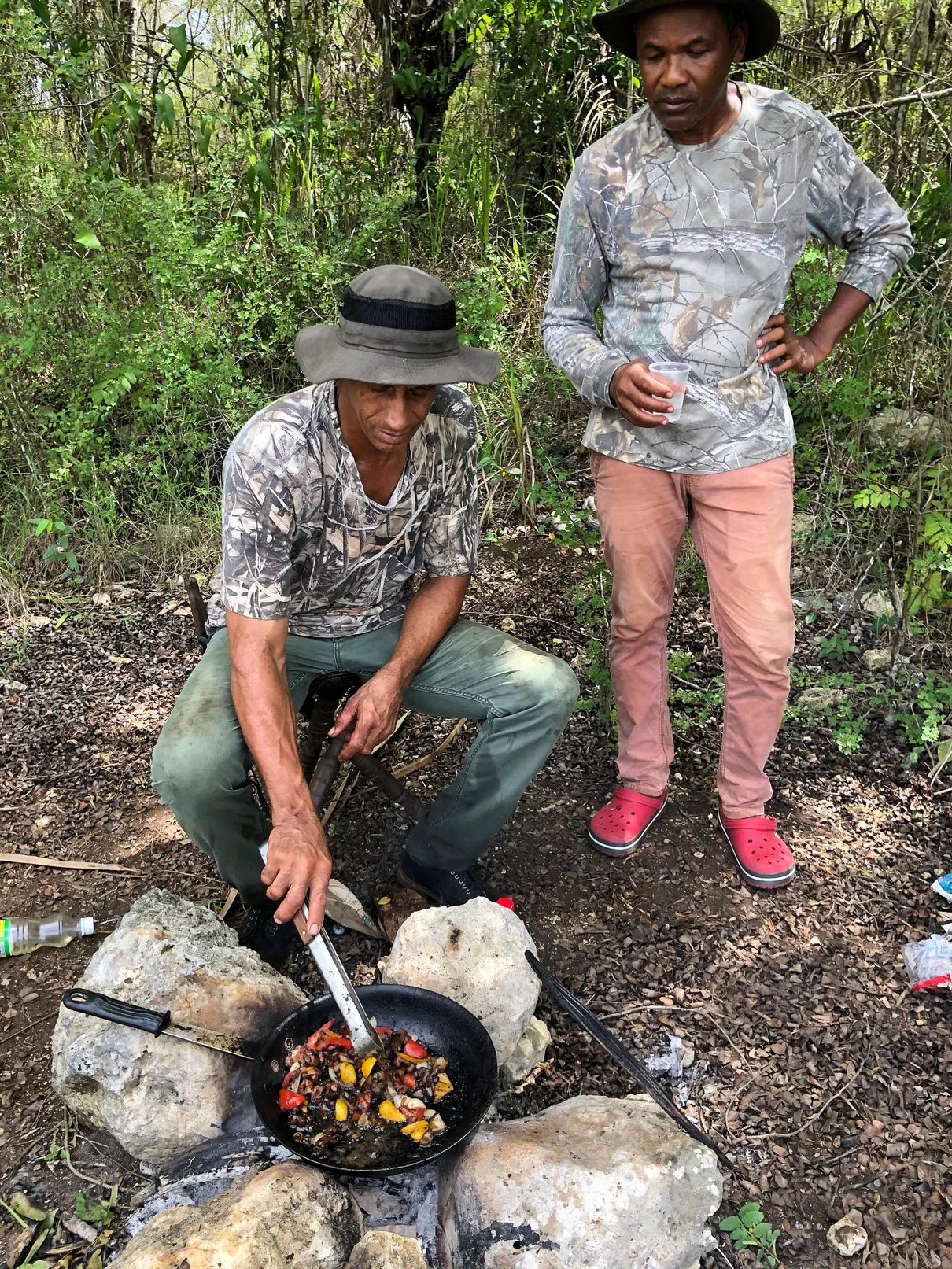
After the morning shoot, hunters gather in shared areas where birds are picked and cleaned. Coolers come out. Fires are lit. Birds are fried or grilled and shared with roast breadfruit and avocado pear. These moments are not rushed. Stories are told. Laughter flows. The bush becomes a place of fellowship rather than competition.
Community and Connection
Bird season is an important time for many rural communities. Year after year, relationships form between hunters from towns and cities and the people who live where the hunts take place. These connections often go far beyond the bush.
Opportunities are created. Jobs are offered. Many children receive back to school support every September through relationships built during the season. Bonds formed in the bird bush grow into friendships, and friendships turn into long term support systems that benefit families and communities alike.
Environmental Stewardship
Bird shooting groups are sometimes viewed negatively, but in many cases they are among the most consistent protectors of Jamaica's natural landscapes. Clubs lease and maintain large tracts of land and forest, helping to protect them from illegal logging, coal burning, dumping, and uncontrolled fires.
In a rapidly developing Jamaica, where deforestation and wetland loss have increased in recent years, these protected lands play an important role. They preserve habitats not only for game birds, but for wildlife more broadly. Many hunters see themselves not as consumers of nature, but as caretakers of it.
Fellowship and tradition — the bush cookout where stories are shared and bonds are strengthened
Ethics, Change, and Responsibility
Like any other sport, bird shooting is not without its challenges. Most hunters respect bag limits, observe the season, and stop once their limit is reached. However, there are newer shooters who did not grow up in the tradition and do not fully understand the responsibility that comes with it.
In recent years, practices such as baiting with rice or corn have changed the nature of the sport in some areas. While effective, these methods have altered traditional patterns and sparked debate among seasoned hunters. These conversations are necessary. They remind us that the future of bird shooting depends on mentorship, education, and respect for the values that have sustained it over generations.
The Season's End
Game birds commonly hunted during the season include white crowned pigeon, white winged dove, mourning dove, and pea dove.
When the season ends, celebration follows. Hunters, families, and friends gather to cook birds in every style imaginable, from rustic bush preparations to more refined dishes. Stories are shared. Old memories are revisited. New ones are made.
As the laughter fades and the fires burn low, everyone understands the rhythm. The bush will rest. The birds will return. And the tradition will wait patiently for the next season to come again.