 Advertisement
Jamaica's Brand Promise at the Water's Edge
By Gina Tulloch-Adams · Publisher · · Holiday Edition · 7 min read
Jamaica promises more than a destination. Brand Jamaica promises a feeling, a culture and a connection to its people. As the national conversation on beach access continues, we look at what happens when the experiences that make Jamaica extraordinary become harder to share.
Paradise is easy to sell.
Jamaica has turquoise waters, white sand beaches, mist-covered mountains, cascading waterfalls and lush river valleys. Our neighbouring islands share many of these natural gifts. What gives Brand Jamaica its extraordinary place in the world's imagination, and what makes Jamaica unmistakably Jamaica, is its people.

Our ska, reggae, and dancehall rhythms, richly seasoned food, quick wit, colourful expressions, traditions and easy familiarity have given the island a cultural identity far larger than its size on the map.
Around the world, Brand Jamaica promises an experience, a feeling, a connection. It's a vibe. The Jamaica Tourist Board has embraced that very language, inviting visitors to discover the moods and experiences that make the island unique.
Which raises a question: how do we keep marketing the Jamaican experience if visitors have fewer opportunities to experience Jamaica's people?
As the country discusses its Beach Access and Management Policy, that question belongs alongside conversations about tourism investment, environmental protection and public rights. Jamaica's beaches are part of our communities, our memories and our cultural identity.
MORE THAN SUN, SEA AND SAND.
The Jamaican tourism experience has always reached beyond the hotel gate.
It lives in the conversation with a fisherman coming in with his catch, the roadside vendor with fresh jerk chicken or roast corn, the laughter over a game of ludo, the music drifting from a gathering down the road, and the chance meeting with someone who knows the community, its history and its characters. These moments are a large part of what visitors carry home.
Tourism Minister Edmund Bartlett, Jamaica's longest-serving tourism minister, has long championed linking tourism with local agriculture, manufacturing, entertainment and small enterprise, and widening community participation in the industry.
The Jamaica Tourist Board's Jamaica Summer Vibes 2026 campaign, launched in July, likewise invites visitors to explore festivals, food, nightlife and local communities across the island.
The message is clear: Jamaica's appeal extends well beyond the hotel room. So when access to parts of the coastline keeps visitors and neighbouring communities apart, it is fair to ask whether the experience we advertise matches the one we make available.
"Going to Jamaica is a homecoming."
COMING HOME TO THE SEA.
For many of us in the diaspora, going to Jamaica is a homecoming rather than a holiday. We return to family homes, stay with relatives, or look after properties in communities our families have known for generations. I was raised in Jamaica and live in South Florida today, and each time I go home, I go as a daughter of the island. I suspect many of you feel the same.
A visitor at a beachfront resort steps straight onto the sand. A Jamaican staying at the family home nearby may need to drive elsewhere, pay an entry fee or find a way around private property.
Jamaica does have designated public beaches, many of them free to enter, and the Government has begun rehabilitating several of them. Still, a public beach somewhere in the parish is different from easy access to the coastline in one's own community.
For the diaspora, our enjoyment of the sea is part of our shared heritage, so the question becomes personal. When we return home to Jamaica, will our access to the beach depend on whether we stay with family, stay at a hotel, or can afford a hotel day pass?
Our ties to the island run deep. Bank of Jamaica figures show remittance inflows reached a record US$3.49 billion in 2025, a vital source of foreign exchange and household support. Beyond remittances, overseas Jamaicans keep family homes, invest in property and businesses, support community projects and spend generously when they come home.
Access to the coastline should never depend on wealth, residence or a hotel package. The point is simpler. Jamaica invites its diaspora to send money home, invest, return and introduce the next generation to their heritage. Keeping the places that connect us to Jamaica within reach belongs in that same conversation.
THE BEACH AS A SHARED CULTURAL SPACE.
For generations, Jamaica's beaches have been where we gather. Families celebrate birthdays, fishermen earn their living, children learn to swim, and friends and communities come together. They are also where visitors and Jamaicans meet naturally, with no excursion or cultural show required.
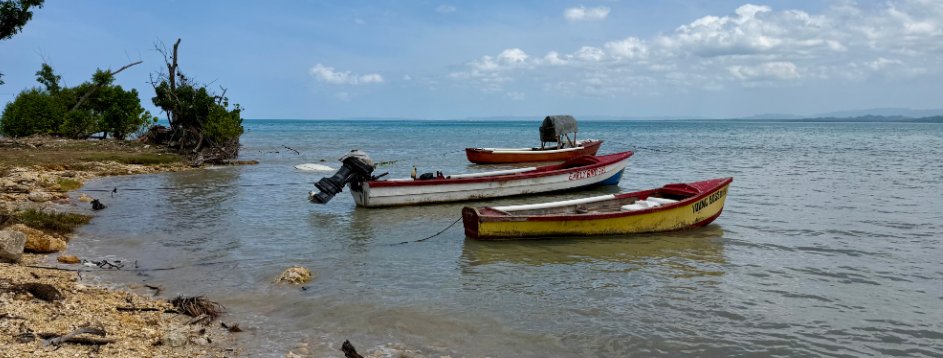
The sea is also a workplace. For generations, fisherfolk have launched their boats from Jamaica's beaches, and vendors have sold jewellery, carvings and souvenirs on the sand. For many families, beach access is a question of income as well as enjoyment, and their livelihoods are part of the conversation as the new policy takes shape.
The beach is both an economic asset for tourism and a social space for the Jamaican people, and those two purposes can sit comfortably together.
Hotels carry real responsibilities: security, guest safety, maintaining their facilities and protecting the environment. Some visitors prefer the privacy and ease of an all-inclusive stay, and there is room in Jamaica's tourism industry for that choice. Many Jamaicans simply hope that choice can sit alongside community access to the shore, and that visitors and Jamaicans can share recreational spaces with respect.
Ideas raised in the current discussion include public access pathways, shared management arrangements, charging for optional amenities rather than for entry, and closer cooperation between hotels and their neighbouring communities.
A CONVERSATION GENERATIONS LONG.
Jamaica's beach access debate is decades old. The Beach Control Act of 1956 set the framework that still shapes much of the shoreline, and questions about hotel exclusivity, access through private land, the standard of public beaches and the rights of fishing communities have followed ever since.
The 2002 Master Plan for Sustainable Tourism Development, shaped by stakeholder consultations that began in 1998 and included local communities, marked an important step toward more sustainable tourism. A national beach policy drafted by NEPA in later years acknowledged that the system of exclusive licences had separated visitors from residents. It noted that while no new exclusive licences were being issued, many existing ones had been renewed.
In March 2026, Prime Minister Andrew Holness tabled the Beach Access and Management Policy during the Budget Debate, saying the 1956 Act and its 1973 amendment had not adequately addressed beach access and would need to be replaced. The Government has also begun rehabilitating nine public beaches across the island.
The policy has drawn a range of responses.
The Jamaica Hotel and Tourist Association has defended managed beach access and called on stakeholders to unite behind a framework for safe, equitable and well-managed access.
The Jamaica Environment Trust has welcomed the policy as a long-awaited opportunity, but says it frames access as something to be provided rather than as an established public right. JET is calling for Jamaica's beaches to be recognised as a public commons held in public trust.
The Jamaica Beach Birthright Environmental Movement, led by Dr Devon Taylor, argues that hotels should allow free entry to the beach while charging for amenities such as bathroom facilities.
The mayors of Montego Bay and Ocho Rios, meanwhile, have described public access and sound management as complementary rather than competing goals.
Running through the discussion are two distinctions worth keeping in view. Designating beaches for public use differs from ensuring people can reach and enjoy them. And charging for services differs from charging for the right to reach the shoreline.
A PRINCIPLE THAT CROSSES GENERATIONS.
The idea that Jamaicans should share meaningfully in tourism is older than this debate.
Francis Tulloch was my father, so I come to his legacy with both pride and a responsibility to be accurate. Throughout his public life, including his service as Minister of State for Tourism and later Minister of Tourism, he championed Jamaican-owned enterprise in the visitor economy, from ground transportation operators to craft traders. When he passed, Minister Bartlett paid tribute to his commitment to protecting small entrepreneurs in those very sectors.
My father served in one administration and Minister Bartlett serves in another, yet both have championed the same principle: tourism should create real opportunity for the Jamaican people. That principle offers a useful measure for the model Jamaica is building today. If our people are essential to the industry's success, how do we make sure they remain part of the spaces where the Jamaican experience unfolds?
BRAND JAMAICA BELONGS TO THE PEOPLE OF JAMAICA.
Jamaica's global appeal has always rested on more than scenery. Our beaches may draw visitors, but our people, music, food, humour and hospitality give the destination its character. These are expressions of a living culture.
The question before us is whether our tourism model leaves enough room for genuine human connection while protecting Jamaicans' relationship with their own natural and cultural heritage. For the diaspora, it is also about passing on a Jamaica that remains accessible, recognisable and welcoming.
There is room for a thriving hotel industry and thriving communities, for investment, environmental protection and public enjoyment. And there is certainly room for visitors to enjoy Jamaica's beauty alongside the people who give it life.
As we promote the Jamaican vibe, we do well to remember who creates it.
After all, what is the Jamaican experience without Jamaicans?
Written by Gina Tulloch-Adams, Publisher. Photography by Emma Wheelhouse.