 Advertisement
A Christmas Long Ago
By Sophia Nicholson · · Holiday Edition · 4 min read
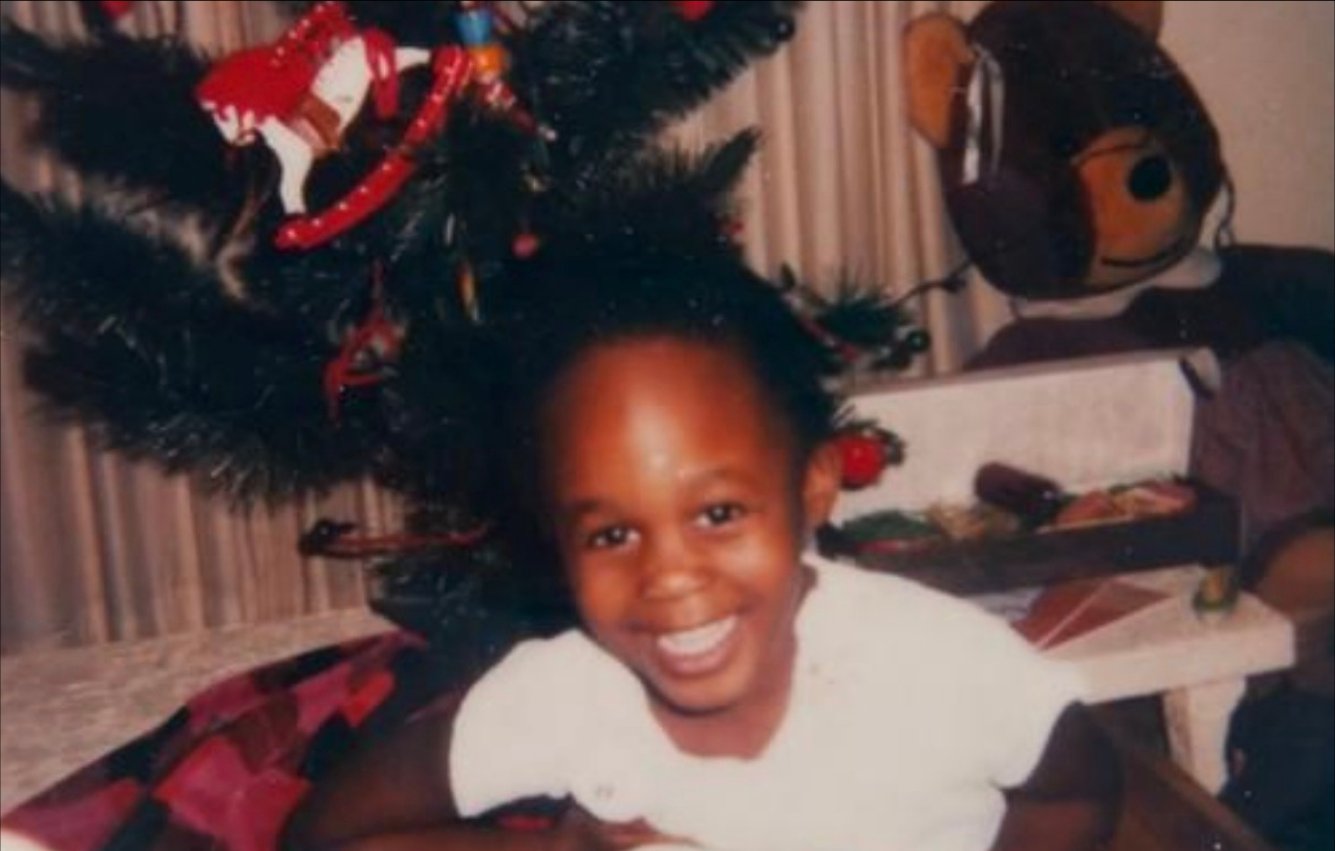
Christmas! The very mention of the word today, in the great white north, conjures images of twinkling lights, festively decorated trees, brightly wrapped presents, and the familiar jingle of sleigh bells, and that jolly, white-bearded gentleman of generous proportions, dressed in his red suit, carried on a winter breeze. Across many predominantly Christian nations, Christmas is celebrated as a season of faith, family, generosity, and goodwill. Yet, as the years have passed, the celebration has increasingly become entangled with commercialism, transforming what was once a sacred occasion into a season of extravagant spending and grand festivities.
But Christmas does not wear the same face everywhere.
In Jamaica, an island kissed by tropical sunshine and caressed by warm Caribbean breezes, Christmas has its own unmistakable rhythm, its own distinctive fragrance, and its own magical charm. And for Jamaican children, the experience could differ dramatically depending on where they lived, the circumstances of their families, and the resources available to them.

For children in the rural countryside, Christmas might mean freshly harvested produce, the sounds of roosters crowing at dawn, and the aroma of food cooking over a wood fire. For those growing up in the bustling urban communities, it might mean crowded streets, noisy vendors, and the irresistible excitement of Grand Market.
And for children in families of modest means, Christmas was often a celebration of ingenuity, sacrifice, and the extraordinary ability to find joy in the simplest things.
Yet there was one story that united us all, regardless of our circumstances: the story of the birth of Jesus Christ, the true meaning of Christmas.
I was a little girl growing up in downtown Kingston, Jamaica, in a family of modest means. My world was not filled with elaborate Christmas decorations or expensive toys, but it was rich in traditions, family, laughter, and experiences that would remain etched in my memory long after childhood had passed.
What follows is my recollection of Christmas through the eyes of a six-year-old Jamaican girl attending primary school in the mid-1970s, when the island's Christmas season possessed a magic all its own.
DECEMBER MEMORIES.
As December approached, something extraordinary seemed to happen to our community.
The transformation began quietly, almost imperceptibly, but soon the entire neighborhood appeared to be caught up in a great seasonal awakening. Streets were swept clean, sidewalks scrubbed, and curb walls brightened with fresh coats of whitewash, that chalky liquid used to give everything a crisp, renewed appearance.
Even the roots of roadside trees received their share of the whitening treatment, as though the entire community had agreed to dress itself in its Sunday best for Christmas.
Inside our homes, the preparations were just as intense.
Wooden floors were wiped before red polish was applied and vigorously buffed until they gleamed. Curtains came down from windows to be washed, while glassware and treasured ornaments were carefully removed from china cabinets and given a thorough cleaning. Plastic flowers, figurines, and every little decorative trinket were washed and returned to their rightful places, ready to welcome Christmas in style. Nothing was too small to escape the annual cleaning ritual. Every corner had to sparkle. Every surface had to shine.
But for us children, there was one task that brought us a particular pleasure: collecting empty soda bottles.
We scoured the neighborhood for discarded bottles, gathering them like precious treasure. Our parents would return them to the suppliers for credit towards a new crate of fizzy refreshments. And when that crate finally arrived, we could hardly contain our excitement.
The delicious, carbonated drinks produced by Desnoes & Geddes, affectionately known as D&G, were not everyday indulgences in our household. They were reserved for special occasions, and Christmas was undoubtedly the grandest occasion of them all.
Christmas carols could be heard blasting on the radio, at various intervals throughout the daily programs, and Christmas songs would play over intercoms throughout the stores, with an aim to get everyone in a festive mood, as merchants prepared their stores for the pending Christmas sales. The store windows were decorated with alluring vibrant Christmas themed decorations. The streetside vendors stocked up on toys, balloons, fee-fees (a tiny paper-like flute), hula-hoops and star-lights. One of our neighbors was a vendor and she asked my sisters and me to assist her with making Christmas hats, made from stock paper, decorated with tinsel and colorful crepe paper, all to be sold at the Grand Christmas Market.
SCHOOL BEFORE THE CHRISTMAS BREAK.
I attended Holy Family Primary School, a Catholic institution where the religious significance of Christmas was never overshadowed by the excitement of the season.
During our morning devotions, the headmistress, Sister Mary Benedict, made certain we understood why Christmas was celebrated. Beneath all the festivities, she reminded us, was the miraculous story of the birth of Jesus Christ. The decorations, the food, the music, and the presents were wonderful, but they were not the reason for the season.
That lesson was reinforced through the annual Christmas pageant, an eagerly anticipated event that brought the entire school community together.
An announcement was made inviting students to audition for various roles. Those with singing voices tried out for the chorus, while children who fancied themselves actors volunteered to read for parts in the nativity play.
My heart was set on acting.
I remember being encouraged to audition for the role of the angel who announced the birth of Jesus. The words assigned to me were drawn from the familiar biblical passage:
"Fear not: for, behold, I bring you good tidings of great joy…"
Even now, decades later, those words remain firmly lodged in my memory.
I practiced them repeatedly, determined to deliver them with the solemnity and conviction the role demanded. And when the parts were finally assigned, I discovered that I had been chosen to play the angel. I was absolutely thrilled!
The preparations that followed were almost as exciting as the performance itself. My mother made my angel dress, while my teacher fashioned a pair of wings from a large cardboard box. She covered them with cotton and white fabric, transforming an ordinary discarded box into something that, to my young imagination, looked positively perfect. A cord was used to secure the wings to my back.
I could hardly wait to wear my costume.
Alongside the pageant, we were given another special assignment: each child had to make a Christmas card to exchange with a friend. I decided on a candle in a candleholder for my design.
After carefully applying glue to the words Merry Christmas, my teacher helped me sprinkle glitter over the lettering. The result was magnificent, or so I thought.
PREPARATION FOR THE CHRISTMAS FEAST.
For the entire month of December, everyone seemed nicer than usual, and all appeared to be in high spirits.
But nowhere was the spirit of a Jamaican Christmas more evident than in the kitchen.
For a Jamaican household, Christmas was not simply a date on the calendar. It was a culinary event, a carefully orchestrated feast for which preparations began days, sometimes weeks, in advance. From the quietest rural village to the busiest urban community, familiar dishes and cherished recipes brought families together in a delicious celebration of tradition across the island.
Everyone knew about sorrel drinks (a crimson, spiced hibiscus drink; the sorrel plant was plentiful during that time of the year), Christmas black cake (fruit cake), eggnog, rice and gungo (pigeon peas), macaroni and cheese, coleslaw, fried ripe plantains, ham and curried goat.
The week before Christmas, my mother bought fresh sorrel from the market. She would select the largest pot she could find, fill it with water and set the crimson blossoms to boil. Once boiled, the sorrel was left to steep with ginger, pimento and cloves, allowing the flavors to deepen and mingle until the liquid developed that rich, ruby-red color that made it unmistakably Jamaican.
She later strained the juice and divided it into two containers. Both were sweetened with dark sugar, but only one container was laced with white rum. That bottle she marked 'adults only', but somehow that marking did not deter us as kids. I remember trying the spiked sorrel and feeling a burn in my throat that I could not quite describe. Some people chose to add a fortified wine, a popular brand back then called Red Label Wine. I happened to favor that version, finding it more pleasing to my young palate than the one with white rum.
My mother was no baker, but my memory of my neighbor preparing the famous black cake is vivid. My sisters and I were asked to assist in the process by rubbing sugar and butter in a bowl until every grain of sugar was dissolved into a creamy mixture.
Without access to an electric blender, as kids, we found the task to be labor-intensive and arduous to say the least, so we took turns when our little hands became tired. Our neighbor then added this paste-like consistency to flour, followed by spices and a generous helping of dark crushed-looking fruits (mainly raisins and prunes) that she poured from a jar. These fruits, she told us, had been marinating in rum and wine, for at least one year. A whole year!
We were assigned other duties, including greasing the baking pans with butter and lining them with greased brown paper. When the rich batter was finally poured into the pans and placed in the oven, the kitchen became filled with a fragrance that seemed to announce Christmas to the entire neighborhood.
But the best part of the process came before the cake was even baked.
We were allowed to lick the spoon and scrape the remaining batter from the mixing bowl with our fingers, making certain that not a single morsel went to waste. What a treat!
The sweet, buttery mixture was delicious, although I distinctly remember feeling my head spin after tasting the batter containing so much rum. My sisters, however, seemed entirely unconcerned by the sensation and continued to declare how delicious it was.
Our neighbor also made eggnog, although I never witnessed the entire preparation. I do remember the unmistakable taste of nutmeg and vanilla, when I was given a sample. It was creamy, fragrant, and unlike anything we drank during an ordinary week.
The day before Christmas day, parents everywhere would put gungo peas to soak, to be boiled in coconut milk, freshly squeezed from finely grated coconut flesh, seasoned with thyme, scallion, pimento, other spices and a whole Scotch bonnet pepper would often be added to infuse the pot with its distinctive aroma and heat. The tender cooked peas would be added to rice and put to steam until every grain had absorbed the rich, savory flavor of the coconut milk and seasonings.
For those who were not of meager means, a ham would have been bought, seasoned and refrigerated overnight, ready to be placed in the oven that morning after breakfast. Its long hours of cooking would allow the meat to become tender and develop that enticing aroma that made every taste bud tingle.
Families with fewer resources, who could not afford a ham, might settle for chicken instead. Those who raised their own poultry would select one of the largest birds from their flock, isolate it in a cage about a week beforehand, and feed it a mixture involving vinegar and crushed garlic. This practice, which they called the purging period, was part of their process to flavor and tenderize it.
Goat meat was another Christmas favorite. Freshly purchased from the local butcher, it would be rubbed with curry powder and an assortment of spices, ready to be transformed into tender, richly flavored "Jamaica curried goat".
And those who personally reared goats might slaughter one for the occasion.
A side note: I remember one year, witnessing the slaughter of a goat during a visit to my grandparents in Westmoreland. I also recall the disturbing sight of a chicken running about after its head had been severed. These were not pleasant experiences for a young child, and I certainly did not relish witnessing them.
Yet somehow, the anticipation of a delicious meal softened those unpleasant memories. The thought of freshly prepared, brown-stewed chicken, its gravy rich and savory, or tender curried goat infused with the fragrance of Jamaican spices was enough to erase those images.
Preparation for Christmas morning breakfast also seemed to be quite the production. This involved the roasting of a yellow heart breadfruit and the soaking of dried salted fish (cod), to be prepared with ackee (our national dish) to be served alongside, a choice, from an assortment of staples: boiled green bananas, hard dough bread, fried dumplings (made from wheat flour or cassava flour), fried pressed green plantains and of course the re-fried slices of the softened flesh of the roasted breadfruit. Callaloo, another favorite of many, was stripped from its stems, washed in salt water, chopped and bagged, to be steamed with pieces of pork rind or bacon. The beverage of choice for that morning would be hot chocolate made fresh from grated cocoa, and coffee for the adults.
In rural communities, many of these ingredients could be harvested from family-run farms or purchased from nearby farmers. For us city dwellers in Kingston, however, the market, the neighborhood grocer, and the corner shop were essential stops in assembling what was needed for the Christmas feast.
CHRISTMAS EVE: GRAND MARKET.
After all prepping was done, we had a light dinner, put the house back in order and headed out to Grand Market. "Tonight, we got to go shopping for our own presents!"
The thought of going to Grand Market was the highlight of Christmas Eve.
We lived in downtown Kingston, just a short walk from King Street and the area popularly known as Parade. The name had its roots in the days of British colonial rule, when parades were held there. In those days, the park was still officially Victoria Park. It would be renamed St. William Grant Park in 1977, in honor of the labor leader St. William Grant.
I can still picture the white stone statue of Queen Victoria standing in the park, a silent reminder of a history that seemed far removed from the excitement unfolding around us.
That evening, however, history was the last thing on my mind.
Each of us proudly clutched a crisp, pinkish-colored fifty-cent note, given to us by our adult cousin, who was visiting from England. To a grown-up, fifty cents might have seemed insignificant; to three little girls armed with Christmas dreams, it was a fortune.
My mind raced with possibilities.
"Surely, it could get me a Christmas hat, a fee-fee and a pack of star lights, some balloons and possibly my wish of all wishes, a doll, with eyes that blinked."
The city streets seemed busier than ever, with bustling shoppers, surging from stall to stall, as vendors called out their wares with the enthusiasm of performers competing for an audience. Cars and buses struggled through the congestion, their horns adding to the great urban symphony.
…And then there were the smells.
The perfume of cotton candy mingled with the sharp freshness of peppermint and the irresistible aromas of traditional Jamaican sweets. Candy sellers displayed asham, made from roasted ground corn kernels and sugar; grater cakes fashioned from grated coconut and sugar; tamarind balls; pinda cakes, made from peanuts; and wangla, a delicious sesame-seed confection.
From roadside kitchens came the waft of the savory aroma of fish fried until crisp, accompanied by thinly sliced carrots drenched in fiery sauce, made of Scotch bonnet pepper, vinegar and pimento. Pan pork and jerk chicken sizzled over hot surfaces, releasing clouds of fragrant smoke. Roasted corn crackled over open fires, while street-side chefs fried saltfish and festival (the sweet, dense, golden-brown cornmeal dough) that made the perfect accompaniment to any of the savory dishes.
Nearby, soup vendors stood over enormous pots, stirring their bubbling creations with the confidence of seasoned experts. Pumpkin soup, spicy corn soup, and chicken-foot soup sent enticing vapors into the evening air. Peanut porridge, thick, warm, and comforting, another roadside specialty, offered another tempting treat.
I spent what seemed to be the entire evening out and about, wandering the streets, watching children pick at enormous balls of fluffy cotton candy, while others slurped snow cones (shaved ice drizzled with brightly colored syrup) served in a cone shaped holder, made from stock paper, their faces sticky with sugar. Balloons bobbed above the heads of shoppers, and the shrill sounds of fee-fees pierced the air.
I wandered, watched, listened, and absorbed everything.
At first, I thought everyone would be as cheerful as the children enjoying their treats. After all, was this not the season of goodwill? Was Christmas not supposed to bring good cheer and make people kinder, gentler, and more generous?
But I soon discovered that the adults working at Grand Market did not always share the carefree spirit of the children. I could hear vendors engaging with each other, as they sharply criticized shoppers who stopped at their stalls, handled their merchandise, asked questions and walked away without making a purchase. I even witnessed a vendor raining blows down on a passerby who had stepped on a tin toy and crushed it with her boots, the kind that had platform size heels. She apparently refused to pay for the broken toy.
Where did the kind Christmas spirit go?
To my young eyes and ears, this seemed to contradict everything I had been taught about the Christmas season.
Mother explained it was the vendors' most important commercial event of the year; proceeds from sales would possibly go to pay back debts, rent that was due and for many, to simply put food on their tables.
So, tolerance and patience were not extended for time wasters and those who were just simply looking and not buying. Mother also taught us the importance of spending wisely. Before we ventured into the market, she had checked prices, calculated what our money could reasonably buy, and reminded us that we were not to handle things carelessly or waste a vendor's time. We heeded her caution and made sure to pay for items we touched.
That evening, I learned another early lesson about the world: the same Christmas market that brought unbridled joy to a child could carry the weight of financial survival for an adult.
Still, my own little world remained full of excitement.
Time seemed to lose its meaning. I could have stayed there for hours, perhaps an entire day, so completely captivated by the spectacle.
When we finally returned home, late that night, we carried our treasures proudly: Christmas hats, fee-fees, balloons and a pack of star lights.
The money had not stretched far enough to buy my dream doll. For a moment, that disappointment lingered, but I was happy nonetheless; I was able to experience the festivities of Grand Market!
Grand Market had truly offered me something else, something (I thought) no money or doll could replace, an unforgettable adventure filled with color, laughter, and the glorious feeling of being part of my city celebrating Christmas.
The sights, a kaleidoscope of color and movement, that seemed to have stretched endlessly in every direction. The sounds, the smells all lingered and formed the memory of a lifetime for this little Kingston girl.
CHRISTMAS MORNING.
The day felt noticeably different from every other morning in that year. The day seemed brighter, the air seemed lighter and laughter seemed to spill effortlessly from conversations in my household and from neighbors. Somewhere nearby, a family played Christmas music on a stereo, while others tuned their radios to festive programs.
My morning began early. I was awake long before the first rooster announced the arrival of dawn, every minute of this special day, I thought, was not to be wasted sleeping in.
There was no Christmas tree to gather around, no expectation of seeing brightly wrapped presents brought from that mythical man called Santa Claus. After all, where would Santa land his sleigh in tropical Jamaica? We had no snow-covered rooftops, no chimneys through which he could squeeze, and certainly no reindeer waiting to prance across our skies.
Surely, Santa was busy delivering presents to children across the world… he belonged to a world of make-believe that existed only in the Western regions or between the pages of storybooks or flickered across television screens.
Even the magnificent evergreen Christmas trees, laden with ornaments and sparkling lights, were foreign to the natural landscape of our island. Those who could afford to oftentimes purchased artificial versions to recreate the Christmas scenes they had seen overseas. For many of us, however, such displays belonged to a world that seemed wonderfully enchanting but was far removed from our everyday reality.
And decidedly, that was all good for them. Besides, we had already purchased our little gifts at Grand Market the night before, and the experience itself was a big gift and a treat. We had a large mango tree in our backyard under which we often sat and told stories and the breakfast feast we were about to eat was also a big treat.
My nose welcomed the aroma of breakfast, rising from the kitchen, where the previous day's preparations had finally come to fruition. The table was laid with an abundance of food, and we sat together, eating without hurry, talking, laughing, and savoring every bite.
As the morning gave way to afternoon, Christmas continued at its own unhurried pace. Mother made us clean up and bathe, and we each tried on our Christmas clothes, the dresses that she had made. Somehow, a new dress every Christmas had become a cherished family tradition.
Our mother's aunt, who was visiting from England, had arrived with a barrel of goodies, shipped ahead of her visit. From that treasure-trove, she produced a pair of shiny black patent shoes for each of us, their polished surfaces gleamed like black glass, catching the light whenever we moved our feet. A little Vaseline rubbed over the leather seemed to make them shine even more brilliantly, and we were instructed to apply it regularly to help maintain their condition.
These shoes were to be paired with frilly ankle socks, all gifts from England, to be worn to church on the first Sunday after Christmas Day and only on very, very special occasions.
On a few occasions, I remember having to persuade our mother to let us wear them, asking with as much innocence as we could muster, "Mummy, can we please borrow our Christmas shoes?"
Soon the kitchen became the center of activity again, pots simmered, and familiar aromas filled the house.
For the religious household, breakfast would be consumed after an early morning Christmas Day church service, after which gifts were exchanged (as a demonstration of the ultimate gift, God gave to the world, the Christ Child, born on Christmas Day). Immediately after the gift giving, the parents or adults in charge of cooking the Christmas dinner, would then retreat to the kitchen to begin cooking.
Dinner in our house was served a little late that day. No one was hungry after that big breakfast feast and the excitement of playing with our friends as they showed off their Christmas gifts was enough to take our minds off food.
After dinner we settled down, not to watch TV, there was none to draw us indoors, not to play on devices, there were none, not to play with a shining new toy, there was none, but we sat on the veranda to play a card game called Long Remembrance, which our mother had taught us. The cards were placed face down on the floor, and the challenge was to turn them over and find matching pairs.
It was a simple game, but it could keep us engaged for hours. We concentrated fiercely, trying to remember the positions of cards revealed during previous turns. Every successful match brought a burst of excitement, while missed opportunities provoked groans of disappointment.
And then something happened that would transform an already memorable Christmas into the most unforgettable one of my childhood years.
I remember noticing our mom's aunt leave the veranda and retreat into the house.
At first, I thought nothing of it; adults frequently disappeared to attend to matters that held little interest for children. Soon she stepped back onto the veranda and called for our attention. In her hands were three boxes, one for each of us, and said, "Merry Christmas".
We squealed with delight, without actual knowledge of the boxes' contents.
We had not yet seen what was inside, but that hardly mattered; anything that came from that barrel, all the way from England, in our young minds, was a wonderful thing!
I opened my box and saw the most beautiful doll I had ever seen. She had soft golden hair, blue eyes that resembled polished marbles, and long eyelashes framing delicate eyelids that closed when I laid her flat.
I stared at her in astonishment.
For a moment, I could scarcely believe she was mine.
The doll I had longed for, the one I had dreamed about while clutching my fifty-cent note at Grand Market, the one I had hoped against hope I might somehow be able to afford, was now resting in my hands. My sisters had received dolls of their own too and their excitement matched mine.
I must have thanked my mom's aunt a thousand times.
I skipped, I jumped, I hugged my doll tightly, afraid that if I loosened my grip, someone might tell me it was all a dream.
The disappointment of the money that had fallen short, the doll I had been unable to buy at Grand Market, faded into insignificance.
I had received something I had not expected.
Something wonderful.
Something that had seemed impossible only the night before. My day was made, and just like that, without Santa Claus, Christmas had come!
And suddenly, I understood that Christmas did not always deliver its greatest gifts according to our plans.
For a six-year-old girl growing up in the inner city of Kingston, Jamaica, this was a moment of pure, unrestrained happiness!
That evening, when the excitement had finally settled and bedtime approached, I carried my doll to bed and held her close.
The day's memories drifted through my mind: the bustling streets of Grand Market, the sweet taste of Christmas treats, the aroma of sorrel and black cake, the shine of my new shoes, the laughter on the veranda, and the unexpected gift that had made my heart overflow with joy.
Outside, the neighborhood gradually quieted. The sounds of Christmas faded into the warm Jamaican night.
I hugged my doll a little tighter.
And just before sleep carried me away, I whispered the words that perfectly captured the happiness of my little six-year-old heart:
"Best Christmas ever."
The little girl who once dreamed of owning a doll with blinking eyes grew up, but the memory of that Christmas never faded. Even today, when the familiar melodies of Christmas carols begin to play and the scent of sorrel fills the air, I am transported back to that little home in downtown Kingston, where a simple gift could make a child's entire world shine.
For there, in the heart of a Jamaican community in the mid-1970s, Christmas had taught me a lesson that no amount of money could buy.
Christmas does not need to look the same everywhere to be magical.
Written by Sophia Nicholson.