 Advertisement
Jonkunnu: The Jamaican Christmas Tradition That Refused to Disappear
By Elizabeth Smith · · Holiday Edition · 4 min read
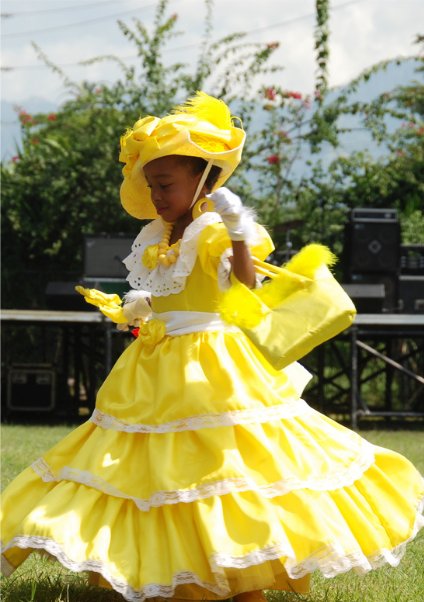
You heard them before you saw them. First came the high, sharp notes of the fife and the steady beat of the drums, and then, somewhere down the road, the screams of children running for their lives. Or so they thought.
Jonkunnu was coming!
For generations of Jamaicans, Christmas was not complete without these extraordinary masqueraders. Pitchy Patchy whirled through the crowd in a storm of coloured cloth. Cow Head and Horse Head sent children scattering in every direction, Belly Woman kept the adults laughing, and the Devil needed very little encouragement to frighten anyone who stood in his path. Some children ran towards the excitement. Others hid behind their mothers, peeping out just long enough to see whether the coast was clear.

It is loud, it is colourful, and it is wonderfully Jamaican. Behind the laughter, though, lies a history that reaches back to the days of slavery, when the people who created this tradition had very little freedom to celebrate anything at all. Jonkunnu is more than a Christmas memory. It is part of the story of how Jamaican culture survived, adapted and found its own voice.
A TRADITION BORN BEFORE FREEDOM.
Long before Emancipation, enslaved Africans in Jamaica were allowed a few days away from plantation labour at Christmas. Those brief days became precious opportunities for gathering, music, dance and the expression of an identity that daily life tried hard to suppress. Out of these celebrations grew the tradition we know today as Jonkunnu.
Its roots are layered. African masquerade traditions laid the foundation, and over time European influences found their way into the costumes, characters and performances. What emerged was neither wholly African nor wholly European. It was something unmistakably Jamaican.
Even the name has a story. Jonkunnu, the spelling used by the Jamaica Cultural Development Commission, has also been written as Jonkonnu and John Canoe. One longstanding explanation links it to John Conny, a powerful African merchant and leader on the Gold Coast, in present-day Ghana, in the early eighteenth century. In 1774 the British historian Edward Long described the masquerade in The History of Jamaica, one of the earliest written records we have of it. Historians still debate where the name truly comes from, but there is no doubt that Jonkunnu was firmly established in Jamaica long before slavery ended.
Those early accounts were written by outsiders looking on. The people who performed Jonkunnu had reasons of their own that went far beyond entertaining spectators. For men and women living under slavery, the chance to put on elaborate costumes, take on new identities and perform in public together carried a meaning that is hard to overstate. For a few days each year, the streets were theirs.
WHEN JONKUNNU TOOK TO THE STREETS.
By the nineteenth century, Jonkunnu bands were a familiar part of Christmas across the island. They travelled through towns and villages, stopping at homes and gathering places to dance, entertain and collect a few coins, a drink or something to eat. Children followed at what they hoped was a safe distance, and adults came out to enjoy the show.
Jonkunnu was also a stage for satire. Performers dressed as kings, queens, soldiers and figures of authority, and for a few days ordinary people could play extraordinary roles. Not everyone in colonial Jamaica welcomed that freedom. Officials feared large crowds and the disorder they believed would follow.
Matters came to a head in Kingston at Christmas 1841. Acting against the advice of the colonial government, the Mayor of Kingston moved to stop the celebrations. A riot followed. The mayor was struck in the face by a stone, and the police fired on the crowd. Jonkunnu was suppressed in the capital for years afterwards, but it lived on in communities across the island.
That survival is the heart of the story. Jonkunnu did not endure because those in authority thought it worth preserving. It endured because ordinary Jamaicans kept performing it.
A GLIMPSE OF JONKUNNU NEARLY 200 YEARS AGO.
Some of the most precious early images of Jonkunnu come from the Jamaican artist Isaac Mendes Belisario. He drew the John Canoe performers from life in 1836, and published them in Sketches of Character in 1837 and 1838, the years just before full freedom came in August 1838.
His hand-coloured plates include Koo Koo, or Actor Boy, the Jaw-Bone, or House John-Canoe, and the Red Set-Girls with Jack-in-the-Green beside them. The costumes are elaborate and the characters plainly theatrical. These were not people simply dressing up for Christmas. This was an established art form with its own characters, music and traditions.
Belisario's pictures also show how much the tradition has changed. Some figures he recorded are rarely seen today, while others rose to prominence in later generations. Like Jamaica itself, Jonkunnu has never stood still.
MEET THE CHARACTERS.
Ask an older Jamaican about Jonkunnu and the conversation turns quickly to the characters. Each had its own personality and its own role to play, and for many children the real question was not which one they liked best, but which one frightened them most.
The cast was never fixed. Characters varied from one part of the island to another, and the Jamaica Cultural Development Commission notes that many of today's figures took shape after Emancipation, drawing on both African and Caribbean influences. Some characters have disappeared altogether. Here are twelve of the best known.
PITCHY PATCHY.
Perhaps the most popular Jonkunnu character today, Pitchy Patchy is dressed in shredded strips of brightly coloured cloth, topped with a square hat or a feathered cap trimmed with tinsel and mirrors. He is never still. He darts in and out of the crowd, sometimes stopping to confront a spectator with a loud growl before spinning away again.
The cultural consultant Cheryl Ryman has described him as a ghost from the past, a figure who is ever changing yet ever constant, wearing the same coloured strips while changing his headdress from one occasion to the next. Oral tradition holds that his costume echoes the leafy camouflage once used by the Maroons in warfare. For many Jamaicans, Pitchy Patchy is the face of Jonkunnu.
COW HEAD.
Cow Head wears calico cloth tied tightly around his head, with half a coconut shell on top to hold a pair of real cow horns. A wire mesh mask with painted features covers his face. He charges at the spectators to keep them back, swinging his head from side to side.
According to the JCDC, horned figures in African tradition stood for strength and power, and were associated with warriors, funerals and ceremonies marking the passage into adulthood. Not that any child running from Cow Head was thinking about symbolism at the time.
HORSE HEAD.
Horse Head is traditionally built around a real animal skull, often a mule's, with a hinged jaw that opens and shuts, mounted on a pole. The skull is painted and given eyes for a lifelike look, and the performer's body is hidden under a long cotton drape. The American researcher Martha Beckwith recorded a Horse Head at a Jonkunnu parade in Lacovia, St. Elizabeth, carrying a horse's skull on a wooden frame built to work the jaws.
The character is believed to represent the plantation overseer, who usually appeared on horseback with a whip in his hand. Knowing that Horse Head is only a performer and believing it while those jaws are snapping towards you are two very different things.
THE DEVIL.
The Devil is usually dressed all in black and carries a trident. His tall cardboard headdress is shaped like a cone and covered in mirrors, and he wears a cowbell tied to his backside, so you can usually hear him coming. The JCDC describes him as a reminder to resist the influence of evil. Despite the name, he belongs to the theatre of Jonkunnu. His presence does not make the masquerade a religious ceremony.
BELLY WOMAN.
Belly Woman, sometimes called Belly Mumma, is a heavily pregnant woman, usually played by a man. Her great gift is making her belly move in time with the music, and her antics are designed purely to make the audience laugh. Jonkunnu has never been short of humour, and Belly Woman makes sure of it.
THE WILD INDIAN.
The Wild Indian carries a tall cane and a crossbow, and wears a black braid with a towering headdress of feathers. That headdress is a small marvel of invention, decorated with playing cards, Christmas ornaments, newspaper clippings, pieces of glass and mirrors. A foil-covered heart sits on his chest among strands of beads. His origins are less clearly documented than those of other characters. The JCDC suggests he may be a tribute to the Caribbean's lost Indigenous peoples, such as Jamaica's Taíno, although that connection has not been firmly established.
THE POLICEMAN.
The Policeman stands for legal authority. He wears a uniform of a black and white striped shirt and trousers with red stripes, and a hat with a red band, with a red cloth hanging from the crown down to his neck. In a tradition that has always enjoyed poking fun at power, his place in the band is no accident.
THE SAILOR.
The Sailor is dressed in a white shirt and trousers, a black tie and a gold-rimmed hat, with gold trim on his sleeves. He recalls an era when uniformed seamen were a common sight in Jamaica's ports.
THE SET GIRLS.
The Red Set and Blue Set Girls wear full skirts with puffed sleeves, large hats and fine jewellery, and they carry parasols day and night. As their names suggest, they usually appear in contrasting colours. Their elegant dress reflects the European finery promoted by the plantocracy, and the JCDC traces the word "set" to the language of Quadrille, the square dance. Belisario drew the Set Girls in the 1830s, which tells us how long they have been part of the parade.
JACK-IN-THE-GREEN.
Jack-in-the-Green is covered completely in coconut palm leaves, so onlookers can never tell which way he is looking. His mask shows two faces, one with eyes open and one with eyes closed, which the JCDC links to themes of past and future, life and death. His leafy disguise lets him blend into his surroundings, which made him the ideal guard for the Set Girls.
KOO KOO, OR ACTOR BOY.
Actor Boy is the dandy of the parade. He is flamboyantly dressed in silk, satin, lace and frills, with a long, loose jacket over a huge skirt. Long curls fall over a small face mask, and his headdress sparkles with mirrors, feathers, jewels and coloured beads. He moves with a majestic stride and swings a whip as he goes.
The JCDC traces him to the self-styled actor groups of the early nineteenth century. His performance leans on pantomime, music and dance, and he stands for the long history of Jamaican theatre and our love of the dramatic.
THE HOUSE JONKUNNU.
The House Jonkunnu of the past wore a frightful mask and carried on his head a huge model house filled with puppets. The house was a replica of a plantation great house, a symbol of the power and privilege of the plantation era, and of the oppression behind it. He was also known as Jawbone Jonkunnu, after the dried lower jaw of a horse that was played alongside him, its teeth rattled by running a piece of wood up and down. Today he is known as Houseboat, and his mask is far less ghastly than it once was.
THE MUSIC THAT MADE EVERYONE MOVE.
Jonkunnu was never a quiet affair. The fife carried a sharp, piercing melody that could be heard from far away, while the bass drum and the rattling drum kept the rhythm. Together they announced the masqueraders long before anyone could see them, a blend of African rhythm and European influence that belonged to Jamaica alone.
And Jonkunnu was never meant to be watched from a distance. The performers played to the crowd, the music pulled people into the road, the children screamed and the adults laughed. Unlike a show watched quietly from a theatre seat, Jonkunnu made everyone part of the celebration, whether they planned to be or not. That was its magic.
PART OF A JAMAICAN CHRISTMAS.
Jonkunnu belonged to a wider world of Christmas celebration. On Christmas Eve, Grand Market brought town centres alive with vendors, music, toys and families out late together. Christmas morning meant church for many households, followed by dinner with sorrel and Christmas cake. On Boxing Day came the LTM National Pantomime, a holiday institution in its own right, and older Kingstonians still remember the excitement of Santa Claus arriving on King Street.
Among all of this, Jonkunnu offered something different from the solemnity of church or the bustle of the market. It was a celebration of performance, imagination and inherited culture, and for many families it was the sight and sound that said Christmas had truly arrived.
KEEPING JONKUNNU ALIVE.
Over the twentieth century, Jonkunnu slowly lost some of its place in Jamaican Christmas. Costumes take time, skill and money to make. Musicians and performers need chances to practise and perform, and each new generation has had more and more ways to spend the holidays. Many community bands found it harder to keep going. Yet Jonkunnu never disappeared. Dedicated performers kept it alive, often with few resources and little recognition beyond their own districts.
The Jamaica Cultural Development Commission has worked for decades to support Jamaica's traditional folk forms, including Jonkunnu, through its National Festival of the Performing Arts and its training programmes. In February 2023, a Jonkonnu Road March and Competition brought bands from across the island to Half-Way-Tree. It was led by the Institute of Creative Training and Development in association with the JCDC, 24/7 Productions and the CHASE Fund, and the JCDC offered workshops to help groups prepare. In late 2024, the JCDC brought its traditional folk form workshops back face to face for the first time since the pandemic, with Jonkonnu among the forms it is working to preserve alongside Quadrille and Brukins.
Preserving a tradition like this takes more than an occasional stage. Someone must know how to make the costumes, teach the rhythms on the fife and drum, and show young performers how each character moves and what it means. Much of that knowledge lives with older practitioners, which is why passing it on to the next generation sits at the centre of the revival effort.
For younger Jamaicans, Jonkunnu can be a first introduction to part of their heritage. For older Jamaicans, it is a happy return to childhood. And for the diaspora, it is a distinctly Jamaican tradition to share with children and grandchildren who may know the island mainly through family stories, music, food and holiday visits.
MORE THAN A JAMAICAN TRADITION.
Jonkunnu is part of a larger Atlantic story. In The Bahamas, the related festival of Junkanoo has grown into a great national celebration of its own. In North Carolina, enslaved communities held Jonkonnu celebrations at Christmas from sometime before 1824, a tradition that historians trace back to the Caribbean and to Jamaica in particular. It faded there by the early 1900s, and today it is remembered mainly through heritage presentations at historic sites.
These traditions are not identical. Each grew its own characters, costumes and meaning. But their kinship speaks to the movement of African peoples across the Atlantic, and to the remarkable resilience of the culture they carried with them. For a diaspora spread across the world, that is a meaningful reminder that our history has never been confined to the shores of one island.
WHERE CAN WE SEE JONKUNNU TODAY?
Jonkunnu is no longer a regular part of Christmas in every community, but it lives on through community bands, cultural presentations and special events. If you are spending Christmas in Jamaica, look out for performances that feature it. And if you have children or grandchildren who have never seen a Jonkunnu band, make it part of your holiday. They may run from Pitchy Patchy at first, but they will have a story to tell afterwards.
A TRADITION WORTH PASSING ON.
There is something extraordinary in the fact that a tradition born in one of the darkest chapters of our history still brings laughter and excitement to Jamaican communities today. Jonkunnu outlasted slavery, the suppression that followed Emancipation and the arrival of countless new forms of entertainment. It survived because generations of Jamaicans made the costumes, played the music, taught the dances and passed the characters on, one Christmas at a time.
That is what makes Jonkunnu so much more than an old Christmas custom. Jamaican culture has always been created and carried by its people, often in circumstances that demanded real resilience and imagination. Whether our children and grandchildren will know the sound of the fife and drum depends, in part, on what we choose to share with them now.
There are many ways to enjoy Christmas in Jamaica. But there is only one Jonkunnu.
Written by Elizabeth Smith, in collaboration with Home Sweet Jamaica and the Jamaica Cultural Development Commission.
Elizabeth Smith serves as Director, Corporate Services and Access to Information Responsible Officer at the Jamaica Cultural Development Commission (JCDC). She contributed historical research, cultural reference materials and photographs for this feature. All photographs courtesy of the Jamaica Cultural Development Commission and used with permission.