 Advertisement
Before the Memories Fade
By Toni Whittingham · · Holiday Edition · 4 min read
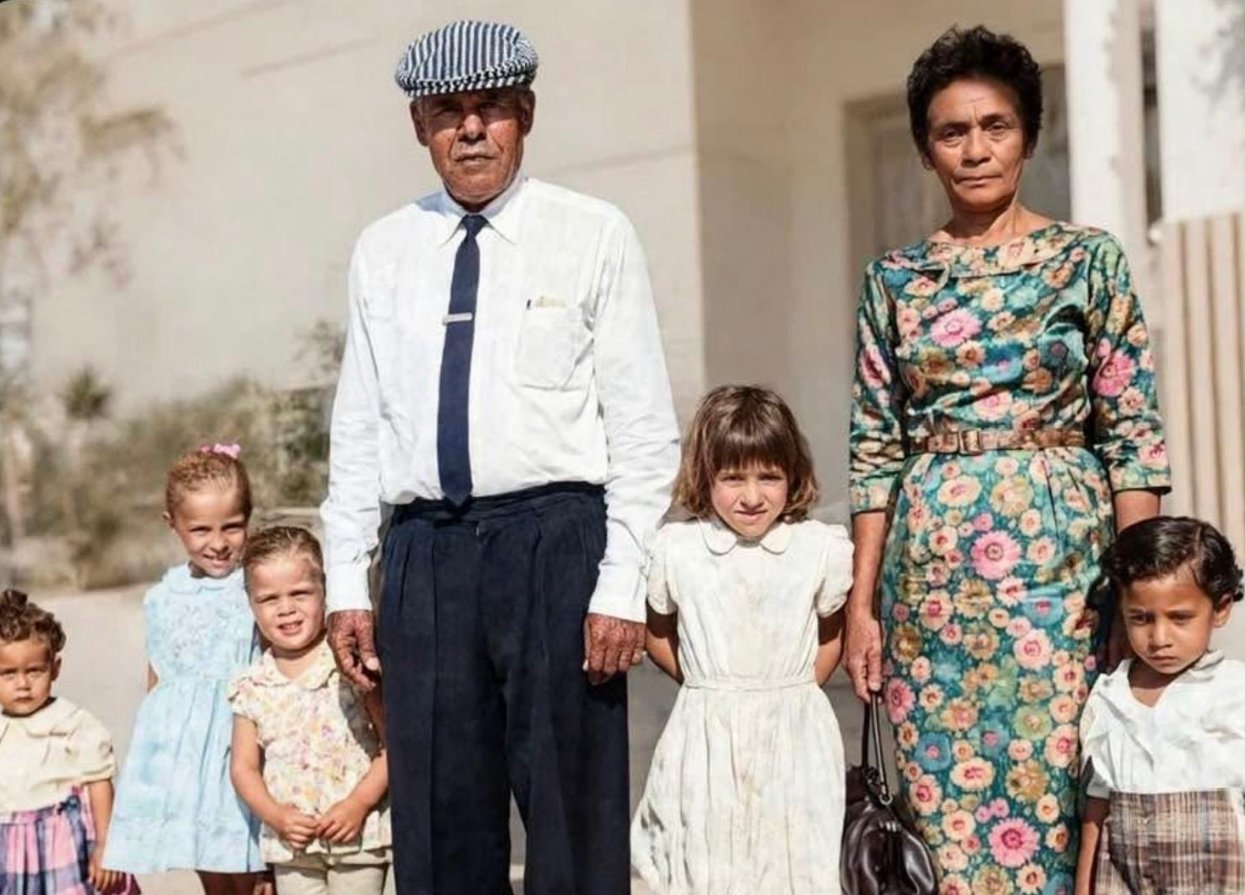
At Home Sweet Jamaica, we cherish the family, legacy and traditions that are uniquely ours. As Marcus Garvey reminded us, "A people without the knowledge of their past history, origin and culture is like a tree without roots." This Christmas, restorer Toni Whittingham shares her journey of preserving everyday Jamaican life, one photograph at a time.
It started with a face, and a street I almost recognized.
I found an old black-and-white photograph: two men pushing a banana-laden cart down a dusty road past a Building Society building. Another showed a mule cart clattering past the Royal Bank of Canada. The images were faded, scratched, quiet. When I restored one and added color, suddenly I could feel the heat of the day, the weight of the cart, the life in that moment.

That's when this stopped being just a hobby.
THE JAMAICA THE HISTORY BOOKS LEFT OUT.
The official archives love governors and great houses. My collection is different. It is the everyday: children standing in front of the American Grocery in the early 1900s; people strolling around the bust-topped fountain on the Parade in Montego Bay, the square we now know as Sam Sharpe Square; the Montego Bay Court House, not as a postcard, but as a living street; mid-century streets packed with vintage cars, shoppers in 1950s dress, and signs for the Free Port Shop.
These were working people, market people, children playing, horse-drawn funeral hearses, a busy intersection on an ordinary afternoon. When I restore them, I put them back into the story of Jamaica. I give dignity back to ordinary life.
COLOR IS A BRIDGE.
When you see a photograph in black and white, it's easy to think, "That's long ago. That's not me." When you see the same image in color, the turquoise sea behind a crowded beach day, the warm brown of the wooden buildings, the bright dress on a woman passing by, it becomes immediate.
I want to be honest about what color is. It is my best, careful interpretation, guided by research, never a replacement for the truth of the original. That is why I always pair the original with its restored version. I want people to see the before and after and feel the shock of recognition: these were real people in a real, colorful world.
COMING HOME WITHOUT A PLANE TICKET.
Living in Florida, it's easy to feel far. But sitting at my computer, cleaning a scratch, researching what color a hotel wall actually was in 1920 or what shade a 1950s American car would have been, I'm back there. I'm walking those streets. For those of us in the diaspora, restoration is a way of coming home without a plane ticket. It's memory work.
PATIENCE IS A FORM OF RESPECT.
Each photograph takes patience: removing dust, fixing contrast, matching skin tones so they look true. That patience is respect. These ancestors didn't have studio lighting. Someone captured them between work and life. The least I can do is take the time to see them clearly and present them beautifully.
That portrait of the older man laughing with a drink in his hand, or the four little boys coloring in a preschool classroom: those are someone's father, someone's childhood. When I restore them, I'm saying: you mattered. You still matter.
WHEN THE ALBUMS COME OUT AT CHRISTMAS.
Every time I post a restored pair, someone comments, "That's my grandmother's street!" or "My uncle pushed a banana cart just like that!" Young Jamaicans who never saw a mule cart learn what one looked like. Elders see their youth in color for the first time.
That is why Christmas matters so much to this work. It is the season when the generations sit at the same table. The barrel has been unpacked, the house is full, and sooner or later somebody pulls out the old album. That is the moment to ask the questions only the elders can answer. Who is this? Where was this taken? What year? Whose wedding? When the people who know are gone, a photograph without a name becomes a stranger's face, no matter how much it once meant to the family.
So this year, I am asking you to give your family a gift that costs almost nothing. Sit with the oldest person in the house. Turn the pages slowly. Write down what they tell you. A photograph is only half a memory; the story is the other half.
ONE PHOTO AT A TIME.
My hope is that these restored images outlive me. That a child fifty years from now will find that colorized view of the Parade and understand that Jamaica was always vibrant, always hardworking, always beautiful, even when the original photograph tried to make it look faded.
This hobby taught me that preservation doesn't have to happen in a museum. It can happen at your kitchen table, one photograph at a time. This Christmas, let it start at yours.
THIS CHRISTMAS, SAVE THE FAMILY ALBUM. 1.
Ask before you scan. While the family is together, sit with the elders and record names, places and years. A voice note on your phone counts. 2. Label gently. Write on the back of a print with a soft pencil, near the edge, or label the sleeve instead. Never use ink, tape, sticky notes or paper clips on the photograph itself. 3. Free them from "magnetic" albums. Self-adhesive album pages damage photographs over time. Move prints into photo-safe sleeves and boxes. 4. Mind the heat and damp. Keep photographs somewhere cool, dry and steady. Avoid attics, basements, outside walls and anywhere prone to leaks, all the more in Jamaica's and Florida's humidity. 5. Handle with care. Clean, dry hands; hold prints by the edges; keep food and drink away. 6. Make copies, then share them. Scan your most precious prints and keep the files in more than one place, so a single storm or lost phone cannot take them all. 7. Look to the national collection. The National Library of Jamaica holds historical photographs in its digital collection. If you have images of public life in Jamaica, contact the Library to ask about donating them.
Sidebar guidance adapted from the Library of Congress.
Article and photography by Toni Whittingham.