 Advertisement
Miramar Parkway: East to West
By HSJ Staff · · Holiday Edition · 5 min read
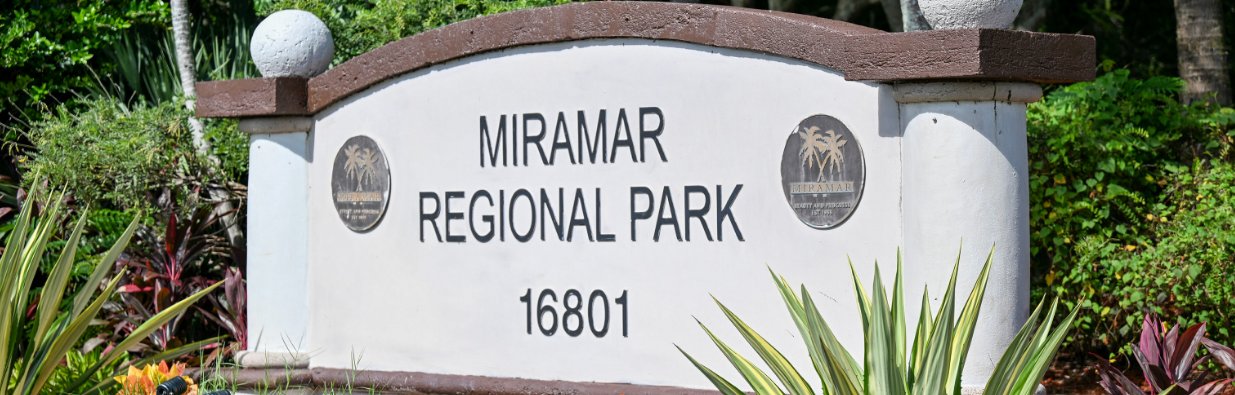
The city of Miramar is named for a neighbourhood in Havana.
That is worth knowing about Miramar. In 1953 a developer named A.L. Mailman bought a stretch of dairy land from a farmer called H.D. Perry and put up fifty-six concrete block houses with flat roofs, affordably priced for workers and retirees. When the city was incorporated on 26 May 1955 it held fewer than two hundred residents, and its name came from the Miramar district of Havana, Cuba, where Mailman kept a summer home. Miramar means look at the sea, yet Miramar has no coastline.
Miramar was built for working people. What the houses were priced for was a wage, not a salary, and the people who bought them came with ambition the developer never had to supply. A city named for a view that did not exist filled up with people who could imagine a different kind of paradise. They were not buying a house for themselves. They were buying one for their children.

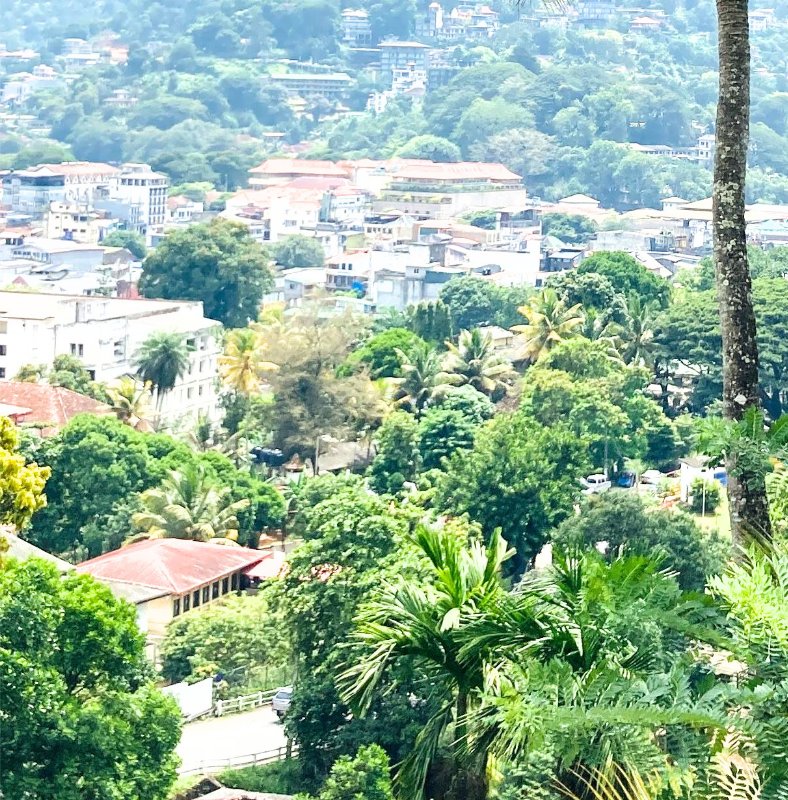
Forty years on, the houses were still within reach, and that was why a nurse from Clarendon or a bus driver from Kingston could look at one and see a life. Seventy years later, the Spanish name has stayed and the city underneath it has evolved into something else entirely. Its roughly 140,000 residents have built a place where businesses thrive, churches fill on a Sunday, and the music from a passing car is often reggae or dancehall. The lines at the patty counters are filling up, and the Jamaica flag is flown without apology.
Ask how many Jamaicans live here and you will get two answers.
The first comes from the United States Census. The American Community Survey covering 2018 to 2022 found that 7.9 per cent of Miramar residents were born in Jamaica. It is an honest number and it measures an honest thing. It counts birthplaces.
"You can tek the man out a yard, but yu ca'an tek yard out of di man."
The second answer came at the Ole Time Fair in August 2025, when Major General (Ret'd) Antony Anderson, then Jamaica's Ambassador to the United States, stood before the crowd at Miramar Regional Park and said that more than 30 per cent of the city's people claim Jamaican heritage. He called Miramar a blend of enterprise, pride, and unity.
Both numbers are correct. They are simply counting different things.
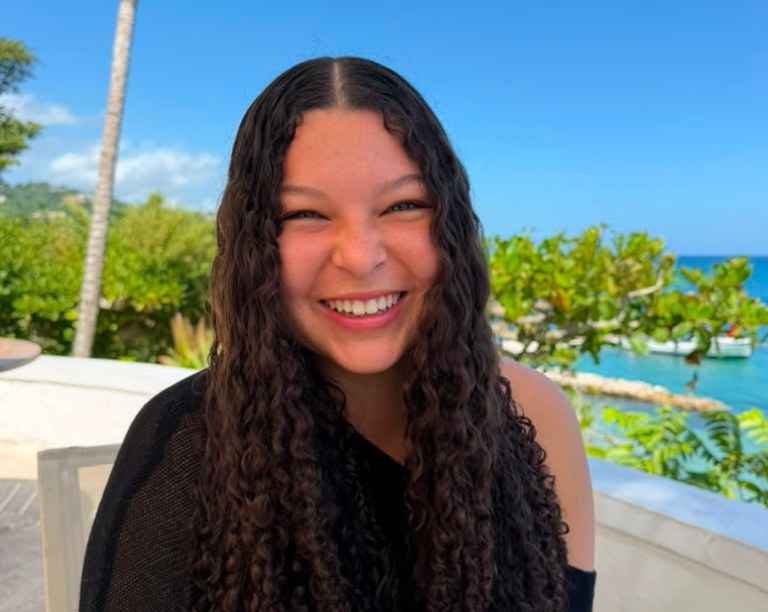
The distance between seven and thirty is where our story lives. It is filled with people the survey forms cannot quite see. The granddaughter in Riviera Isles who has never landed at Norman Manley and will tell you she is Jamaican before she tells you anything else. The man who left Westmoreland at eighteen, whose children were born in Broward, whose grandchildren know the words to Festival songs from an era long past.
Jamaican identity has never required a birth certificate to prove itself. It travels. It survives a generation, then two, then three, carried in a kitchen, a church pew, a school tie, a way of laughing.
So this is not a story about how many Jamaicans live in Miramar. It is witness to what they built here, and what they still send home.
It begins on one road.
Two institutions keep a culture alive when it is far from home. One feeds the body and one feeds everything else, and in Miramar they tell a story.
Start with the church, because for many families it comes first. Before the house, before the job that made the house possible, there was a congregation where somebody knew your mother's cousin and somebody else knew which school you went to. That is how a stranger becomes a member of somewhere.
Faith runs deep in Jamaican life, whether in the church, the Revival tradition or Rastafari, and it does not stay behind when a family leaves Jamaica. It migrates with them.
Then there is the food, and in Miramar the food lives on one road.
Miramar Parkway is a Jamaican high street whether or not anybody has ever called it that. Juici Patties, the chain out of Clarendon, sits at 16327. Golden Krust is at 12523 in the Monarch Town Center. Two of the most recognisable patty names in Jamaican life, on the same road.
Between and around them are the ones that grew here. Island Tings at 12318. People's Choice at 8874. Taste Rite at 6847, which now holds the unit where Five Star Jamaican Bakery fed this neighbourhood for years. Barbican Square sits a few streets south on Pembroke Road. These are the businesses that came up with the community, and some of them have since opened doors of their own across South Florida.
Miramar is a long city, and the two ends of the Parkway were built forty years apart.
The east end came first: single storey, modest, within reach of a wage, and it is where most of the Jamaican food still sits. West of Flamingo Road the city filled in from the nineties onward with Sunset Lakes, Monarch Lakes, Silver Shores, Riviera Isles and Vizcaya. Gated, two storey, lawns and lakes and a guardhouse at the entrance.
Same city. Same parkway. The distance between a wage and a business of your own. Nobody planned that road as a ladder. It became one anyway.
Jamaican alumni associations are structured in a way that outsiders rarely understand. Jamaicans organise themselves by the high school they attended, decades later and a sea away from the school gate. They meet frequently, raising funds for the old schools and for charitable causes at home.
Many of those events happen in Miramar, a centrally located, Jamaican-friendly city with families, businesses and a government poised to welcome them.
The Jamaica College Old Boys Association of Florida is registered here. Every year its True Blue Weekend fills the Sunset Lakes Community Center and Vizcaya Park with alumni from Jamaica College and other Jamaican high schools, competing and raising money for the school in Kingston. Hundreds attend. The mayor of Miramar hosts it.
Friends of Good Shepherd International has operated out of Miramar for thirty years, raising support for work in Jamaica one fundraiser and one shipment at a time. Its president, Andrew Foreman, appreciates the city's part in it.
"We have experienced wonderful cooperation with the City of Miramar staff and Commissioners," he says. "The businesslike manner of the staff makes it easy to coordinate our needs with their requirements."
Two Jamaican financial institutions have planted themselves here. Victoria Mutual keeps a Florida office at The Sienna Shops on South University Drive. JN Money sits at 6905 Miramar Parkway. Money moving home is among the oldest obligations in diaspora life, and these are the counters where it happens.
A city shows what it values by what it puts on its own calendar.
Each June, Miramar opens Caribbean American Heritage Month at City Hall Plaza with steel pan, moko jumbies and Caribbean food, a commissioner hosting and the CARICOM consular corps in attendance. The celebration is Caribbean rather than narrowly Jamaican, which is the honest shape of this city.
Then comes the first weekend of August, and Emancipendence, Miramar's largest Jamaican gathering. Three events across three venues. A fete at the Vernon E. Hargray Youth Enrichment Center on the Friday. The Ole Time Fair on the Saturday at the Miramar Regional Park Amphitheater, free to enter, with a re-creation of Kingston's Coronation Market and a stage that has carried Ky-Mani Marley and handed Freddie McGregor the keys to the city. A reception on the Sunday at the Miramar Cultural Center, honouring Jamaicans who have shaped the city.
The Cultural Center carries the year between those dates. On 30 October 2026 it stages Rise, by the National Dance Theatre Company of Jamaica, hosted by Vice Mayor Carson "Eddy" Edwards.
In November, the Grace Jamaican Jerk Festival fills Miramar Regional Park. Organisers put attendance at more than ten thousand guests a year, and the 2026 staging on 8 November is its twenty-fourth. It is not a city event. It is produced by Jamaican Jerk Festival USA, Inc., a Miramar company co-founded and led by Edwards, who was born in Kingston. The city is a named partner.
And every other year, Miramar City Hall hosts the launch of the Jamaica Diaspora Conference, working alongside the Consulate General of Jamaica in Miami to bring Jamaican ministers and consular officials into a suburban American council chamber. In June 2026, close to ninety Miramar residents travelled to Montego Bay for the conference itself, among them nearly the entire commission.
That last detail is the one worth pausing on. A city government does not fly to another country's diaspora conference by accident.
Ask a Jamaican in Miramar about the barrel and no explanation is needed.
For generations the barrel has been how the diaspora keeps its promises: school shoes, tinned food, a warm jacket that makes no sense in Montego Bay but arrives anyway, packed by somebody in Florida who is still, in every way that matters, responsible for somebody at home. It is the most ordinary act of obligation in Jamaican diaspora life, and it happens in this city every day.
That instinct is the thing Miramar has built on, and it is what makes the city more than a place Jamaicans happen to live.
The clearest example runs on a Saturday morning. The Jamaica Hi-5K, championed during his tenure by former Consul General Oliver Mair, draws runners to Miramar Regional Park and sends the proceeds to medical clinics in Jamaica. It runs simultaneously in Central Florida, Georgia, Texas and Arizona, and it returns to Miramar Regional Park on 8 May 2027. A road race in Miramar pays for a clinic in a Jamaican parish.
When Hurricane Melissa struck, the response moved along the same lines. The Consulate General in Miami coordinated with diaspora organisations, humanitarian partners and volunteers, and Miramar was among the communities that turned out. Commissioner Maxwell Chambers, who left the hills of Clarendon at eighteen, raised funds for a mobile medical clinic for rural Jamaica.
Miramar is not a Jamaican city. It is an American one, named for a Cuban neighbourhood, built by a developer who wanted to sell cheap houses.
What it has become, the Jamaicans did that. The nurses, the drivers, the bakers, the old boys of schools thousands of miles away who still turn out every spring to play for them.
They built the life of the city before they held any of its offices. Today four of the five seats on the commission belong to people of Jamaican descent, two of them born on the island. Elected officials, accountable to the people who put them there, carrying this city into its future.
Written by HSJ Staff. Photography by Emma Wheelhouse.