In the Akan language of West Africa, akwaaba means welcome. But on the grounds of the 2026 New Orleans Jazz and Heritage Festival, it meant something older and deeper than that. It meant: We know you. We remember you. We have been waiting.
Two communities, separated for centuries by the Middle Passage, finding each other again through the one language neither colonizer nor hurricane could ever silence. Music. Heritage. Culture.
They are not the same thing, though we often speak of heritage and culture as one. Heritage is what was passed down: the ancestral memory, the roots, the history that lives in the body before it lives in the mind. Culture is what grew from those roots: the dance, the food, the celebration, the living proof that what was planted survived. Heritage looks back. Culture moves forward. And music? Music is the expression of both. It carries the weight of the spiritual and the historical in the same breath. Jazz. Reggae. Gospel.
It is why, when the Jamaican rhythm reached across the Fair Grounds at Jazz Fest 2026, it was more than entertainment. It was testimony. When Jamaica took the stage, it was not simply a Caribbean island taking its place at one of America's great cultural events. It was a homecoming. It was a recognition between two peoples shaped by the same ancestral hand, separated by water and history, reunited by rhythm.
To understand why Jamaica belonged at Jazz Fest, you have to begin not in 1970, when the festival was founded, but centuries earlier, in a small patch of grass at the edge of the French Quarter that would change the course of American music forever.
Akwaaba. Welcome.
The Proof Was in the Instruments
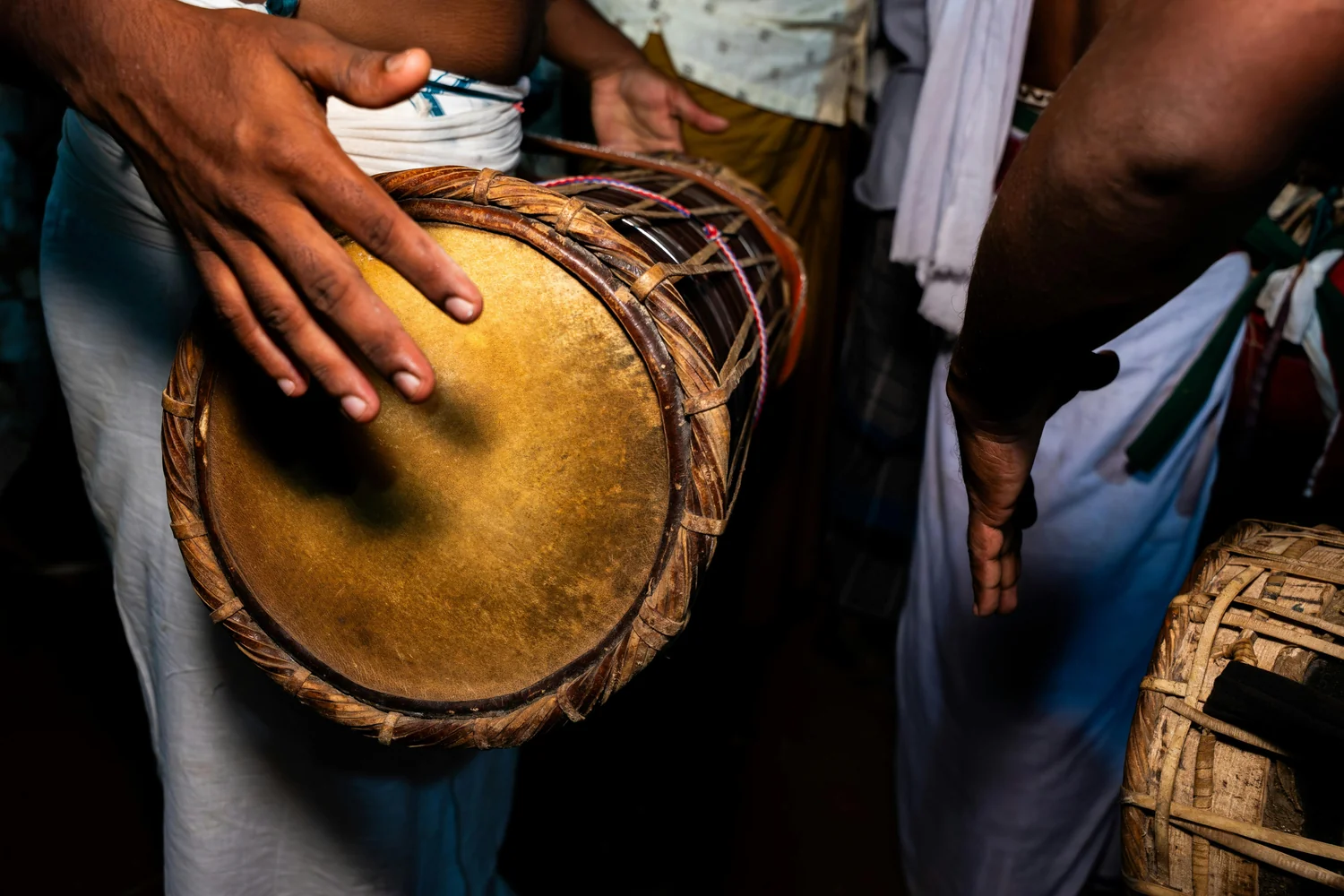
The drums tell an equally powerful story. In the mountains of Jamaica, the Maroons — escaped enslaved Africans who fought and won their freedom from the British as early as 1739 — preserved African drumming traditions in their purest form, using the Gumbeh drum and the Abeng horn to communicate, to worship, and to resist. That spirit of survival carried forward through generations, through Kumina, through Burru, through the Nyabinghi drumming of the Rastafari movement, each one a living link in an unbroken chain of resilience, until those rhythms became the spiritual heartbeat of reggae itself.
In Congo Square in New Orleans, those same African drums thundered every Sunday, feeding what would become jazz. The call and response that defined gospel and jazz in New Orleans was the same vocal structure embedded in mento, Jamaica's first folk music. Jazz and reggae are two answers to the same question: How do you find freedom as a slave? Freedom through music. Different blossoms. Same root.
The proof was never just in the music itself. It was in the instruments. The banjo — that most American of sounds — was first documented in Jamaica in 1687, decades before it appeared on the North American mainland. It came from West African gourd lutes — the akonting, the kora, the xalam — carried across the Middle Passage by enslaved people who refused to arrive empty handed. That same instrument appeared in the streets of New Orleans by the early 1800s, holding down the rhythm section of early jazz.
Congo Square: An Act of Resistance
In the 1700s, under French and Spanish colonial rule, enslaved Africans in New Orleans were permitted to gather on Sundays in an open space that came to be known as Congo Square. There, they drummed. They danced. They sang in the languages of their homelands. They kept alive the cultural memory that slavery was designed to erase. The rhythms they played — the Bamboula, the Calinda, the Congo — carried with them the musical DNA of West Africa. Those rhythms did not disappear. They seeped into the soil of New Orleans and eventually became jazz, the blues, the second line, the Mardi Gras Indian tradition.
As one New Orleans city ordinance restoring the site's name declared, jazz is the only truly indigenous American art form, and Congo Square is arguably where it was born. But what was really happening in that square went far deeper than music. In a world designed to strip enslaved people of everything, those Sunday gatherings were an act of profound cultural resistance. The music carried coded messages that the oppressor could hear but never fully understand. It organized communities. It preserved languages. It held ancestral memory in the body when every other means of holding it had been taken away.
The authorities understood this even if they could not articulate it. In 1835 the Sunday gatherings were banned. In 1851 they were shut down permanently. You do not ban something that does not threaten you.
What is less often told is who was in that square. Historical records confirm that among the enslaved people brought to Louisiana during the French colonial period were men and women from Jamaica and other Caribbean islands, already carrying within them cultural traditions formed under strikingly similar conditions. The Kumina — one of Jamaica's oldest and most sacred African-rooted ceremonial traditions — is among the dance forms documented at Congo Square. Jamaica and New Orleans were not simply shaped by the same African origins. In some cases, they were shaped by the same people.
Akwaaba. Welcome.
Born in Congo Square: The Festival That Grew Into a Movement
On April 22, 1970, the first New Orleans Jazz and Heritage Festival took place in Congo Square, then still known as Beauregard Square. Fewer than 350 people attended. The headliners included Duke Ellington, the Olympia Brass Band, and the Mardi Gras Indians, who paraded through the grounds every day. In a moment that would define the spirit of the festival for decades, gospel legend Mahalia Jackson — performing nearby at the Municipal Auditorium — joined an impromptu second line with the Eureka Brass Band, singing as she marched. Producer George Wein handed her a microphone. She sang. The crowd followed. And Jazz Fest was born.
From the beginning, Wein's vision extended beyond jazz. He emphasized African, Caribbean, and French culture alongside Louisiana's indigenous music traditions. Caribbean rhythms, Caribbean food, Caribbean spirit were woven into Jazz Fest's founding DNA. The festival was never meant to be a local event. It was always meant to celebrate everywhere its roots came from.
By the mid-1970s the festival had outgrown Congo Square entirely and moved to the Fair Grounds Race Course, its current home. It grew steadily from those 350 early attendees into one of the world's most celebrated cultural festivals, drawing nearly 500,000 visitors across two weekends each spring. Fifty-five years on, Jazz Fest remains what it was always meant to be: not just a music festival but, in the words of producer Quint Davis who has guided it for over five decades, a cultural festival. The distinction matters. Heritage brought people to Congo Square in 1970. Culture kept them coming back.
The Geography: How Two Worlds Were Always Connected
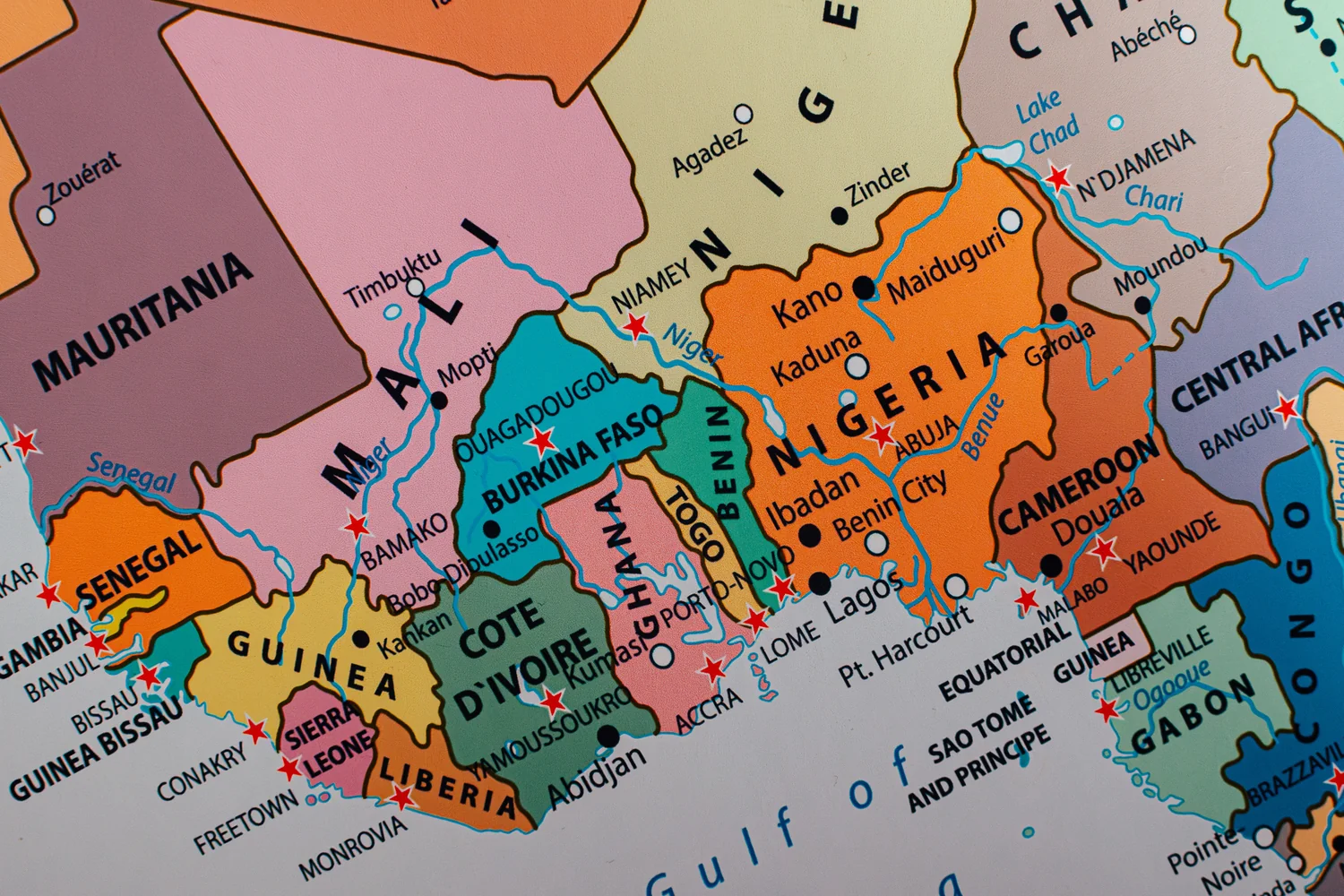
The ships left the same shores of West Africa. Some went to Jamaica. Some went to Louisiana. Some went to Jamaica first, and then to Louisiana. Historical records confirm that enslaved Africans and Afro-Creole people were sold to Louisiana from Jamaica and other Caribbean islands during the French colonial period. Jamaica was not just a destination. It was also a transit point. The same human beings, or their cultural descendants, brought from West Africa to Jamaica, were sometimes moved again to New Orleans.
Both territories drew from the same regions of West Africa: the Gold Coast, the Bight of Benin, the Bight of Biafra, the Kingdom of Kongo. They did not simply share African ancestry in general. They shared specific ethnic and cultural origins. The Akan people, whose language gave us Akwaaba, were among the largest groups brought to Jamaica. The Yoruba and Fon peoples were heavily represented in Louisiana. These were neighbors in West Africa — peoples who shared trade routes, cultural practices, and music long before the ships came.
It was never a coincidence that the banjo appeared in Kingston before it appeared in New Orleans. Or that the rhythms of Congo Square echoed the ceremonial dances of Jamaica's mountains. Or that the call and response of the jazz choir sounded so familiar to anyone who had ever stood in a revival meeting in Kingston. These were not influences traveling across the Atlantic. They were memories traveling within the same people.
Which is perhaps why, when Jamaica finally took the stage at Jazz Fest 2026, something in the crowd recognized it before it could name what it recognized. The reunion had been a long time coming.
Akwaaba.