
Tourism is often spoken about in the language of numbers. Arrivals. Spend. Occupancy rates. Market share. These are the metrics that governments measure and ministers report. But the Jamaica Tourist Board has always understood something that the numbers alone cannot capture.
Culture is the most powerful tourism marketing tool in the world. Not a brochure. Not a billboard. Not a digital campaign, however sophisticated. When a person stands in the middle of the New Orleans Fair Grounds and hears a Jamaican rhythm pulling them through a crowd of half a million people, something happens that no advertisement can manufacture. They feel Jamaica before they have ever set foot on the island. And once you feel Jamaica, you want the vibe.
Cultural Diplomacy as National Strategy
Edmund Bartlett has spent decades building a philosophy of tourism that extends far beyond the beach. As the longest-serving Tourism Minister in Caribbean history and the only individual ever appointed to the role three times in Jamaica, he has had more opportunity than any of his predecessors to shape Jamaican tourism. His handprint will extend beyond his tenure in defining what tourism means and where it is going in Jamaica. That continuity of vision is not incidental. It is one of the reasons Jamaica arrived at Jazz Fest 2026 not as a destination looking for attention, but as a cultural force that knew exactly what it had to offer.
Under his leadership Jamaica has become not just a destination but a global thought leader: the architect of the world's first Global Tourism Resilience and Crisis Management Centre, a convener of international tourism policy at conferences from Nairobi to Berlin, and a nation that understands, with unusual clarity, that tourism is a diplomatic instrument as much as an economic one. His most recent strategic framework, Tourism 3.0, identifies community-based enterprises, local artisans, cultural performers, and tour operators as essential contributors to the tourism value chain — not as add-ons but as the very heart of what makes Jamaica worth experiencing.
At Jazz Fest 2026, that vision took one of its most vivid forms yet. "We are proud to bring Jamaica to the New Orleans Jazz and Heritage Festival," Bartlett said. "Music, art and culinary innovation have always been at the heart of our identity, and the Cultural Exchange Pavilion is the perfect stage to showcase the depth of Jamaica's heritage and reinforce Jamaica's position as a leading destination." That statement is worth reading carefully. Bartlett did not say the pavilion was the perfect stage to sell Jamaica. He said it was the perfect stage to showcase the depth of Jamaica's heritage. The distinction matters enormously. One is marketing. The other is nation building.
Jamaica Thrives: The Numbers Behind the Spirit
When Hurricane Melissa made landfall on October 28, 2025 as a Category 5 storm, the question being asked around the world was not simply how much damage had been done. It was whether Jamaica could come back, and how fast. The answer has been extraordinary.
By the first quarter of 2026, Jamaica had welcomed over one million visitors and generated nearly one billion dollars in foreign exchange earnings, representing an 80 percent recovery in visitor arrivals compared to pre-storm projections. That figure, achieved in a compressed timeframe that few disaster-stricken regions have ever matched, is not simply a tourism statistic. It is a national statement. By mid-December 2025, less than two months after the storm, nearly 72 percent of Jamaica's hotel room inventory had already been returned to service.
The medium-term goal is clear: five million annual visitors and five billion dollars in earnings by the end of the decade. The longer-term vision is even bolder: eight million annual visitors by 2030. These are not aspirational numbers. They are targets being built upon a foundation of resilience, market diversification, and the one force that no hurricane can diminish: the power of the Jamaican diaspora. As Philip Rose, Deputy Director of Tourism for the Americas, has emphasized, the diaspora did not wait to be asked. It showed up, it invested, it traveled, and it told everyone it knew that Jamaica was ready. That is the diaspora at its most powerful: not just as a community, but as an ambassador, a cheerleader, and a lifeline, all at once.
Jamaica is back. Jus' Come.
The People Who Made It Happen
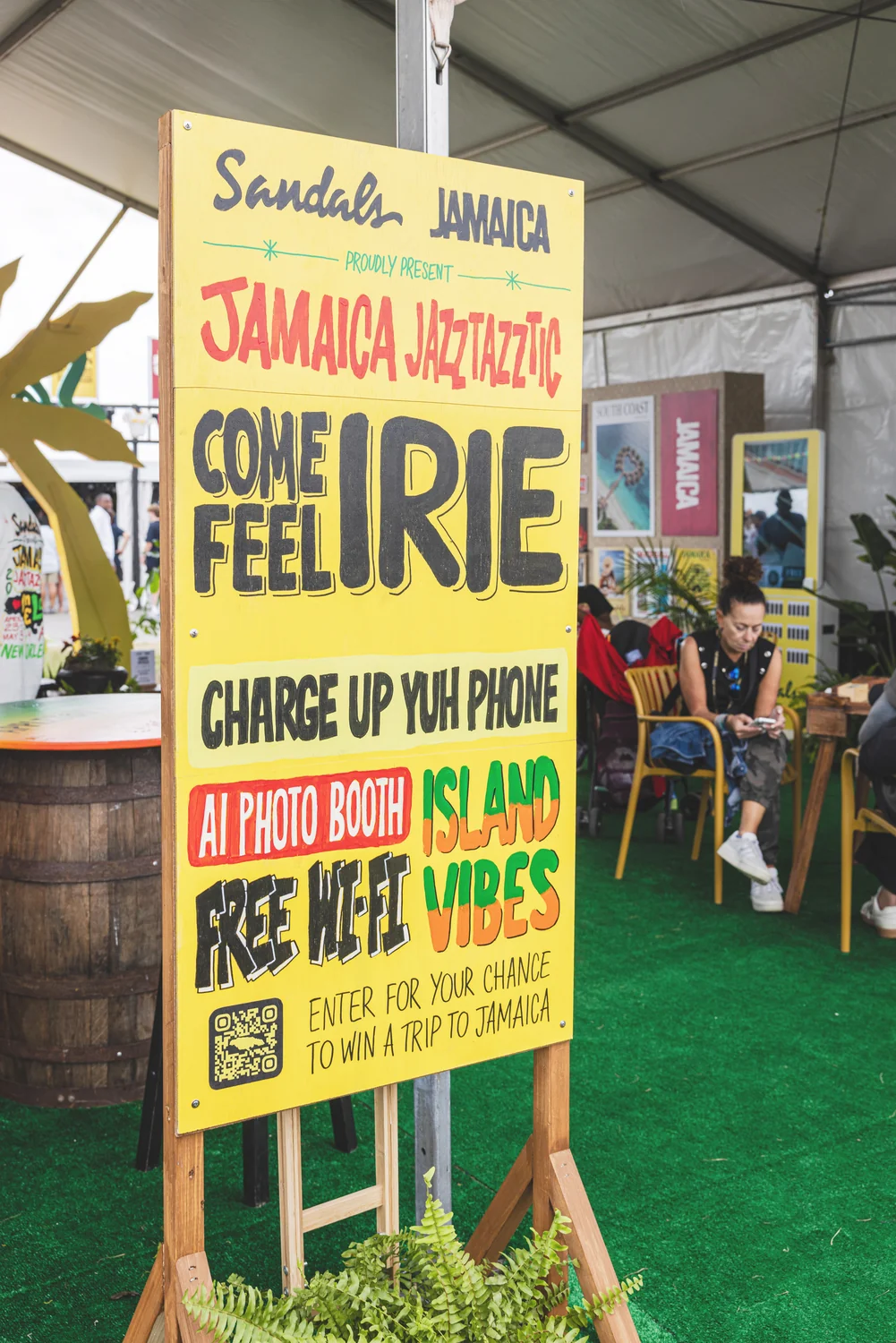
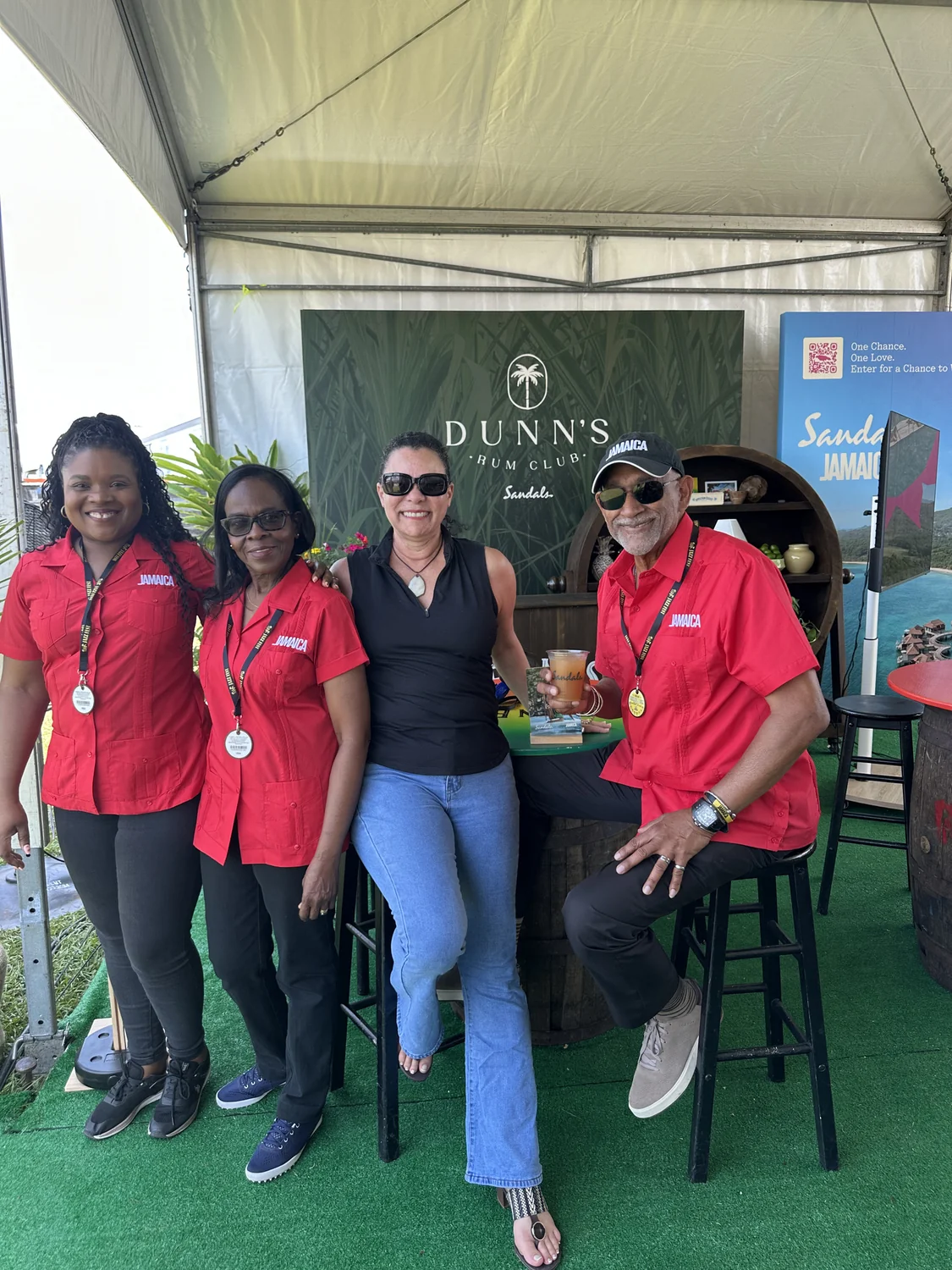
Visions are built in strategy rooms. But they are delivered by people. At the Sandals Resorts and Jamaica Hospitality Tent during the first weekend of Jazz Fest 2026, the Jamaica Tourist Board was represented by three people who embodied everything that Edmund Bartlett's vision is ultimately about: Karlene Shakes, National Sales Manager for the JTB's Southeast USA office; Maxine Garrison-Anderson, Administrative Assistant to the Deputy Director of Tourism; and Christopher Wright, also of the JTB Southeast USA team.
There were no speeches. No podiums. No formal presentations. Just three Jamaicans, standing in the middle of one of the world's greatest music festivals, greeting every person who walked through that pavilion with the one thing Jamaica has always given the world freely and without reservation: warmth. They greeted attendees with big smiles and genuine Jamaican hospitality, delighted to share information about the island, encourage participation in the events, and highlight Jamaica's extraordinary stage lineup and cultural programme. The grace and warmth they brought to that tent was not performance. It was simply who they are.
Christopher Wright, watching the performances from the pavilion, captured the spirit of the weekend in a single statement: "Jamaica is back. These artists demonstrate the resilience of the Jamaican people. It is a great opportunity to be here and to be recognized." For the second weekend, Philip Rose, Deputy Director of Tourism for the Americas, was on the ground as the skies opened and the rain came. He stayed. A champion of Brand Jamaica for over two decades, Rose represented the JTB exactly where Jamaica needed to be seen.
The Vibe: Jamaica Is Something You Feel
Donovan White, Director of Tourism at the JTB, perhaps said it best: "Jamaica isn't just a place you visit. It's something you feel. From the music to the flavors to the creativity of our people, there's an energy that stays with you. Jazz Fest gives us the perfect opportunity to share that spirit in a way that's immersive, vibrant, and unmistakably Jamaican."
Jamaica has always understood this intuitively. Her culture does not sit behind glass. It pulls you onto the dance floor. It feeds you from a pot on the street. It makes you sing along to words you thought you did not know. At Jazz Fest 2026, the JTB gave half a million festival-goers the chance to feel all of that without ever boarding a plane. And in doing so, it planted the most powerful seed in the tourism industry: desire.
The Alignment: Why Jazz Fest and Jamaica Were Always Meant to Find Each Other
The alignment between the Jamaica Tourist Board's vision and the New Orleans Jazz and Heritage Festival's identity is not coincidental. Both believe that culture is not a product to be packaged and sold but a living, breathing force to be experienced and honored. Both understand that music, food, and craft are not accessories to an event but its very soul. And both know that when people feel something genuine, they come back.
Jazz Fest Producer and Director Quint Davis put it simply: the Festival is grateful to Sandals Resorts and the Jamaica Tourist Board for helping bring the magic of Jamaica to Jazz Fest. Both cultures are famous for giving the world music that inspires great joy. The hope, he said, is that the celebration inspires people to experience Jamaica for themselves.
That hope lives in Edmund Bartlett's decades of strategic vision. It lives in Donovan White's conviction that Jamaica is something you feel. It lives in Philip Rose's presence on a rain-soaked second weekend. And it lived, most vividly, in the smiles of Karlene Shakes, Maxine Garrison-Anderson, and Christopher Wright — three Jamaicans standing at the gateway to one of their island's most extraordinary stages yet, welcoming the world in the only way Jamaica knows how. With grace. With warmth. With pride.