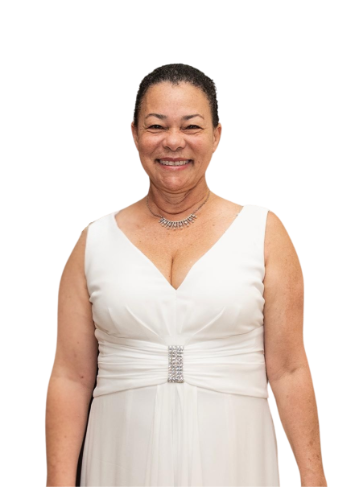
Maxine Walters is a champion of Jamaican culture. She carries it across borders and oceans, and refuses to let the world forget what Jamaica looks like from the inside. She has been doing this, in one form or another, for her entire remarkable life.
Before the signs, before the sarongs, before the skies of Air Jamaica, Maxine Walters was already shaping Jamaica's cultural landscape in ways the world would only come to appreciate decades later. In 1978 she was one of five young Jamaican entrepreneurs, led by Tony Johnson, who founded Reggae Sunsplash, the festival that introduced reggae music to a global audience and created Jamaica's summer tourism season almost single-handedly. The group called themselves Synergy Productions, and together they built something that would run for nearly two decades and change the trajectory of Jamaican music internationally. Maxine stepped away from Synergy after the inaugural festival, but her fingerprints remain on one of the most important cultural events in Caribbean history.
She began her career as one of Air Jamaica's first flight attendants, working on the airline's inaugural flight, a fitting start for a woman who would spend the rest of her life introducing Jamaica to the world at every altitude. From the skies she moved into public relations, then fashion, launching her own line of sarongs that caught the attention of Macy's, which purchased 1,000 pieces and invited her to perform promotional shows across California. While in the United States she became, by her own account, the go-to person for all things Jamaican. The Jamaica Tourist Board called on her. Sandals hired her as a PR officer and sales representative, covering an area from Vancouver to New Mexico. She told the Jamaica Gleaner: the things I know best are my culture and my island, and like all Jamaicans, I love Jamaica with a passion. So I promoted Jamaica. They would use me to close their shows because my passion for Jamaica was so strong that I could take people with me.
Maxine returned to Jamaica in 1988 and reinvented herself as a media expert, building a successful film and television production company, teaching production for feature films at universities across the Caribbean for twelve years, and cementing her reputation as what the Jamaica Gleaner would later call a social legend and an inspirational front-runner: a cultural force who emerged at a time when the preferred fashion was to laud and welcome all things foreign. Maxine Walters was having none of it.
But it is what she has been doing since 1999 that has brought her to the attention of the world in ways that even she may not have anticipated.
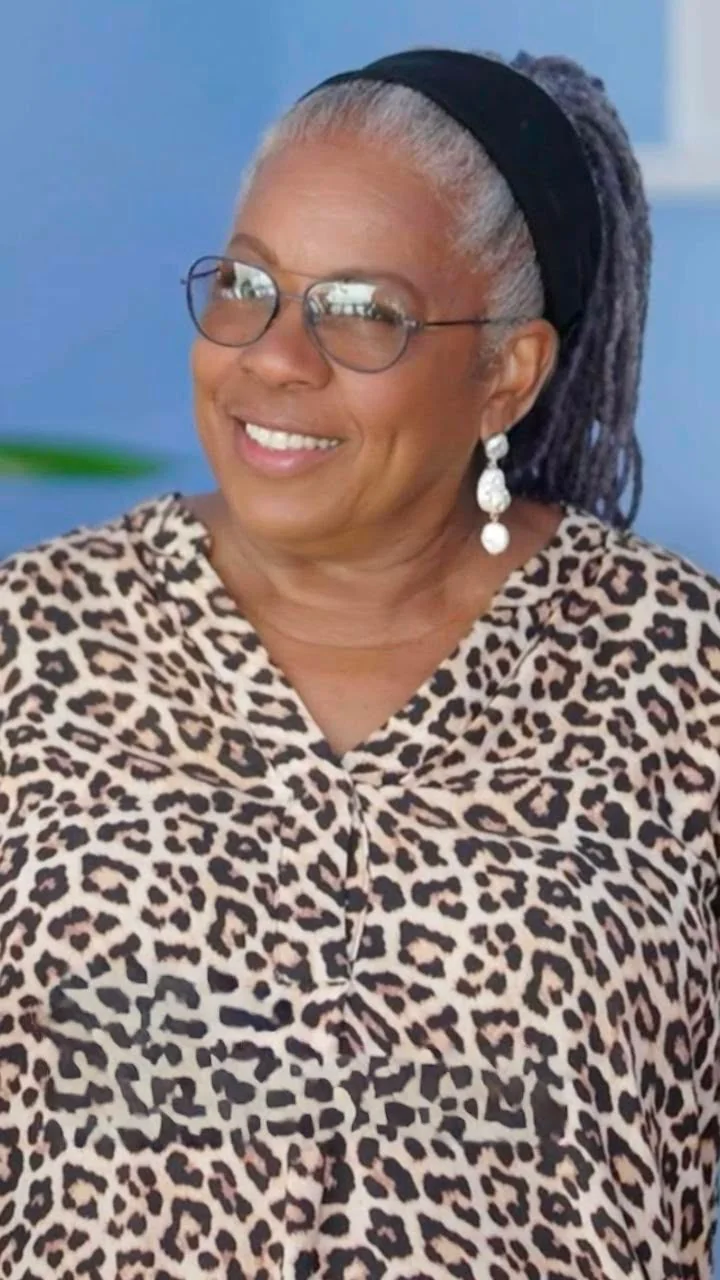
Saving the Signs
It started with a gift. An artist friend visiting from the United States presented Maxine with a hand-painted dancehall sign on her departure. Maxine fell in love immediately. What she saw in that sign was not advertising. It was art. It was language. It was Jamaica speaking to itself in a voice that was bold, irreverent, colorful, and completely its own.
She began collecting. Then she began saving. Because the signs, those magnificent hand-painted posters nailed to poles and trees across the island advertising bashments held at bars, on beaches, and in primary schools, had no one fighting for them. The city considered them litter. After the events passed, the signs stayed on the poles until the authorities took them down and burned them. Maxine collected them before the fires came.
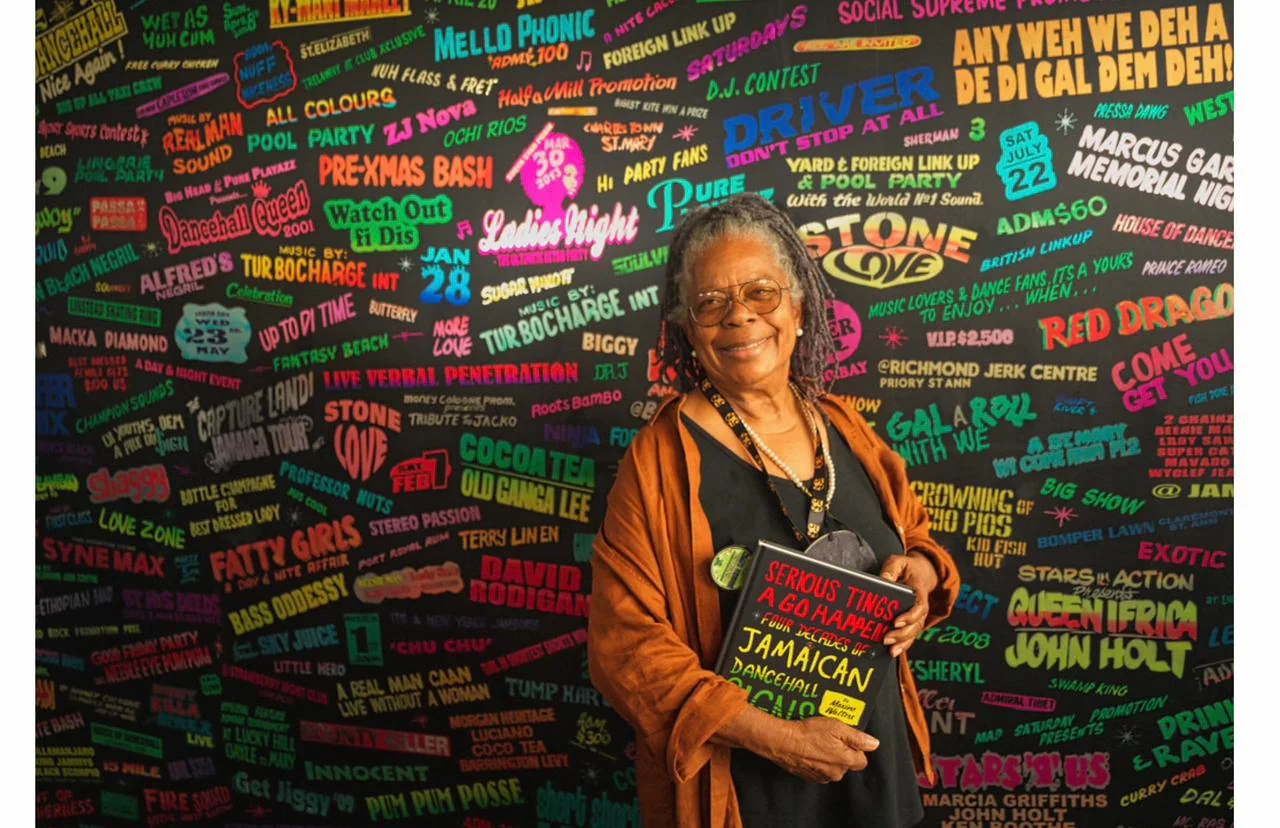
Over more than four decades she has amassed a collection of approximately 4,000 signs, an archive of Jamaican popular culture that is now recognized internationally as one of the most significant collections of its kind anywhere in the world. In 2009, Maxine was invited to exhibit in the Cuban Biennial, and it didn't end there. Montreal, Senegal, Rio de Janiero, the Cité de la Musique in Paris showcased the signs. Gallery in Connecticut was her first American exhibition. Berlin and Japan came calling.
In her own words: they are beautiful and simple. Some are hysterical, and others are really serious. They are signs, and to me they are also a science of communication, which is completely unique and organic. Making the world aware of the uniqueness of Jamaican typography. I'm in love with them.
The Book That Changed Everything
The collection became a book. Serious T'ings a Go Happen: Four Decades of Jamaican Dancehall Signs brought together more than 200 original posters and signs from the early 1980s through today, self-published by Serious T'ings, a division of Walters Productions, with an introduction by Booker Prize winning author Marlon James and music journalist Vivien Goldman. It was not simply a coffee table book. It was, as Marlon James wrote in his introduction, an unofficial history of Jamaican dancehall music told through its graphic design. Every page a document. Every sign a story.
Proceeds from the book went to the Consie Walters Cancer Care Hospice at St Joseph's Hospital in Kingston. That is Maxine Walters in full: the culture and the community, inseparable.
The book's impact rippled far beyond Jamaica. Grammy nominated DJ and producer Walshy Fire of Major Lazer credits seeing Maxine's book as the direct inspiration for his own dancehall visual history project, telling the Jamaica Gleaner: that is when I was like, okay, I need to really think about putting something together. Cindy Breakspeare, former Miss World and lifelong friend, opened Maxine's first exhibition at Harmony Hall Art Gallery in Tower Isle, St Mary, describing her as a doer who doesn't just talk about things. She brings her ideas to fruition.
The Honour She Always Deserved
Jamaica eventually said officially what those who know Maxine have always known. She was awarded the Order of Distinction by Jamaica's Governor-General at the National Honours and Awards Ceremony at King's House, with Prime Minister Andrew Holness among the dignitaries present, for distinguished contribution to the promotion and preservation of Jamaican culture. The citation was precise and perfectly earned.
Maxine received the honour with characteristic grace. She said: I have several awards in my house and this is the first time I am getting a national one from my own country, so I really feel proud and honoured.
A Bigger Room
At the Sandals Resorts Jamaica Cultural Exchange Pavilion at Jazz Fest 2026, Maxine Walters brought her life's work to one of its most extraordinary stages yet. The exhibit, titled Serious T'ings A Go Happen, plastered one corner of the pavilion with her signs: bright, bold, hand-painted windows into Jamaica's dancehall soul. Alongside her collection, artist Matthew McCarthy contributed his own dancehall-inspired original artwork and performed live painting throughout the festival, bringing the visual language of the signs into the present moment in real time. Together their work stopped festival-goers in their tracks, drawing them in the way a great dancehall sign has always done: with color, with energy, and with the irresistible suggestion that something extraordinary is happening just around the corner.
The collaboration extended further still. Jon Sherman, founder of New Orleans born luxury wallpaper company Flavor Paper, partnered with Maxine to transform the pavilion walls themselves into a canvas, printing her dancehall archive as wallpaper that surrounded every performer, every artisan, and every visitor who entered the space. A New Orleans creative and a Jamaican cultural guardian, meeting exactly where they were always meant to meet.
Maxine's book was available for purchase in the artist demonstration tent throughout both weekends. For many Jazz Fest attendees, it was their first encounter with this dimension of Jamaican creativity. It will not be their last.
Those who have known Maxine Walters across a lifetime will not be surprised by any of this. She has always known that Jamaica's culture is worth fighting for, worth carrying across every border, worth introducing to every room she enters. What Jazz Fest 2026 gave her was simply a bigger room. And she filled it completely.
When I think of Maxine, I think of Home Sweet Jamaica.